

TL;DR:
- Structured, intentional drills target weaknesses and track measurable progress in table hockey.
- Proper equipment, setup, and consistent practice improve skill development and game performance.
- Customizing drills to reflect real-game situations accelerates skill gains and competitive readiness.
Many table hockey players spend hours at the table and still feel stuck at the same level. The problem is not effort. It is the absence of structure. Random play builds habits, but not necessarily good ones. Intentional training drills target specific weaknesses, build muscle memory, and create measurable gains. This guide walks you through everything you need: the right setup, a full drill library organized by skill level, the most common mistakes players make, and how to track your progress so improvement becomes visible and consistent.
Table of Contents
- What you need to start table hockey drills
- Drill breakdown: Core exercises for every level
- Avoiding common mistakes and maximizing gains
- Tracking progress and staying motivated
- The truth most guides miss about table hockey training
- Take your table hockey game further with Table Hockey Global
- Frequently asked questions
Key Takeaways
| Point | Details |
|---|---|
| Structured drills work best | Targeted exercises accelerate your skill improvement far more than random practice. |
| Track progress consistently | Keeping records of your drills and results motivates you and spotlights areas for growth. |
| Adapt and stay creative | Customizing and varying drills based on your weaknesses ensures you keep progressing in table hockey. |
| Community boosts results | Engaging with other players for group drills and shared feedback fast-tracks learning and makes training more enjoyable. |
What you need to start table hockey drills
With your motivation and goal in mind, you need the right setup to get the most out of training. Showing up with the wrong gear or a cluttered space will slow you down before you even start.
Essential gear checklist:
- Table hockey set in good working condition
- At least 3 pucks (so you are not chasing one constantly)
- A timer or stopwatch
- A notepad or tracking app for session logs
- Good overhead lighting
Proper equipment can enhance training efficiency, and that starts with keeping your table clean and free of debris before every session. Dust and residue on the playing surface affect puck speed and rod movement, which throws off your timing data.
Your table needs to sit on a flat, stable surface. Any wobble changes the physics of the game and makes your drill results unreliable. Check your table balance tips before committing to a regular training spot.
| Item | Purpose | Priority |
|---|---|---|
| Table hockey set | Core training tool | Essential |
| Extra pucks | Uninterrupted reps | High |
| Timer | Benchmarking speed | High |
| Notepad or app | Session tracking | Medium |
| Lighting setup | Visibility and focus | Medium |
Beyond gear, mindset matters. Drills are repetitive by design. You will run the same sequence dozens of times in a single session. Players who expect instant results quit too early. The gains come from incremental improvement across many sessions, not from a single breakthrough moment.
Pro Tip: Wipe down rods and the playing surface before each session. Clean equipment enhancements your data and keeps your mechanics consistent from rep to rep.
Drill breakdown: Core exercises for every level
Once you are set up, it is time to target every aspect of your game with proven drills. The following exercises cover stickhandling, shooting, goalie reaction, defense, and passing.
Step-by-step core drills:
- Stickhandling circuit: Move the puck laterally across all three rods for 60 seconds without losing control. Focus on smooth, deliberate transfers.
- Rapid shooting: Set a target zone in the goal and take 20 consecutive shots from the same position. Count how many hit the target.
- Goalie reaction drill: Have a partner (or use a ramp) send random shots at your goalie rod. React and block for 90 seconds straight.
- Defensive blocking: Position your defensive rod and practice intercepting pucks rolled from the center. Do 3 sets of 15 reps.
- Precision passing: Pass the puck between two rods 10 times in a row without it going out of bounds. Increase speed each set.
These drills can be adapted for solo or group practice, making them useful whether you train alone or with a club.
| Drill | Beginner target | Intermediate target | Pro target |
|---|---|---|---|
| Stickhandling circuit | 60 sec, no drops | 90 sec with direction changes | 120 sec, full-speed |
| Rapid shooting | 10 of 20 on target | 15 of 20 on target | 18 of 20 on target |
| Goalie reaction | Block 50% of shots | Block 65% of shots | Block 80% of shots |
| Defensive blocking | 10 of 15 intercepts | 13 of 15 intercepts | 15 of 15 intercepts |
| Precision passing | 7 of 10 clean passes | 9 of 10 clean passes | 10 of 10, max speed |
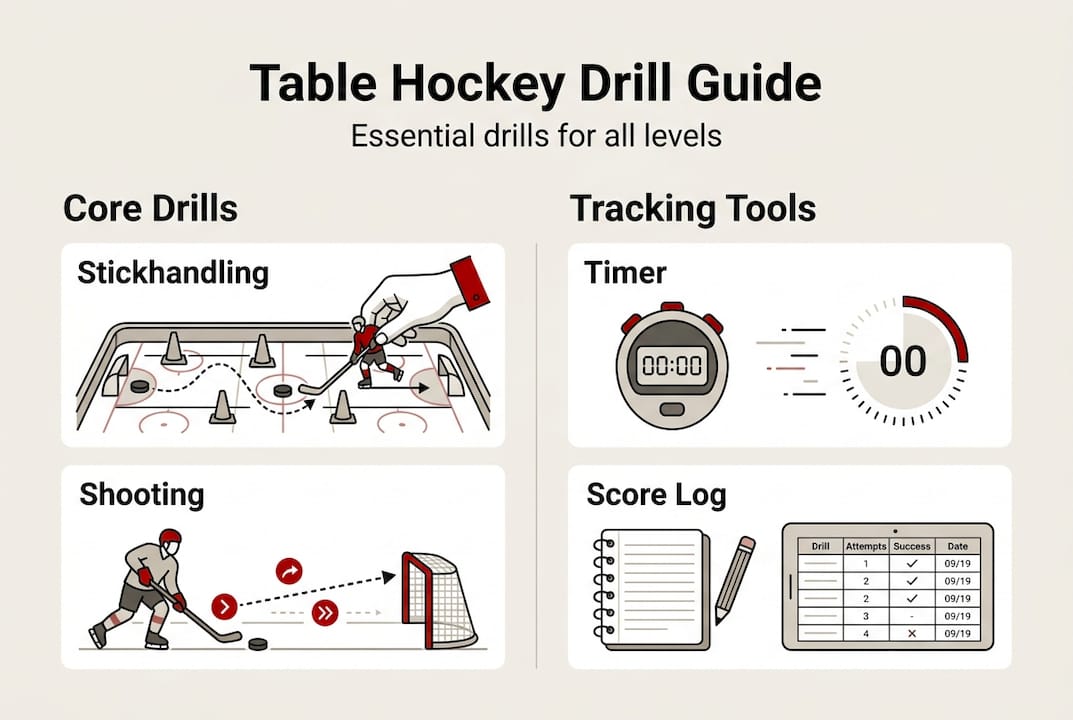
For tracking progress across sessions, log your scores after each drill. Patterns will emerge quickly. You will see which skills are growing and which need more attention. Strong faceoff techniques and solid playing positions become much easier to execute once your core mechanics are sharp from drill work.
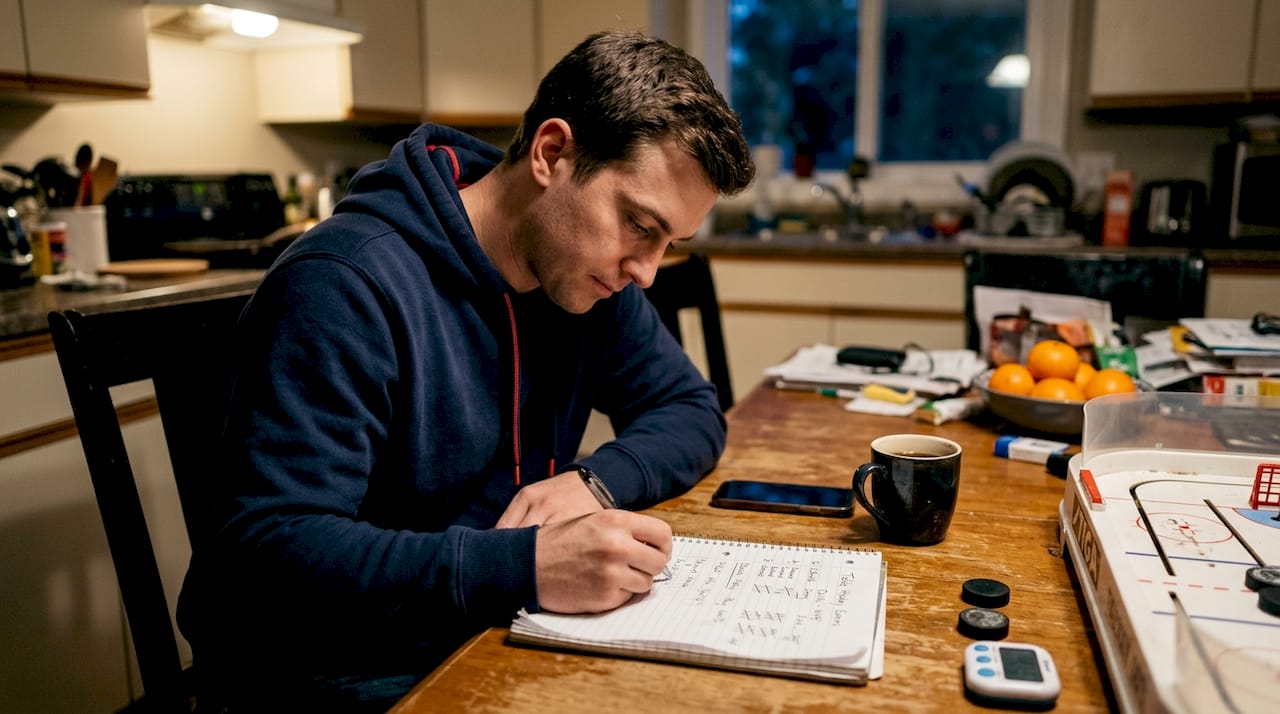
Pro Tip: Use a timer for every drill. Timed reps give you a benchmark to beat next session, which turns abstract improvement into a concrete number.
Avoiding common mistakes and maximizing gains
Consistent results come from avoiding the pitfalls that sideline so many players. Many players plateau due to lack of variety and improper technique, and the fix is simpler than most expect.
Most common drill mistakes and how to fix them:
- Rushing through reps: Speed feels productive but locks in sloppy mechanics. Slow down until the motion is clean, then add speed.
- Skipping the fundamentals: Players jump to advanced drills before their basic rod control is solid. Start with stickhandling every session, no matter your level.
- No feedback loop: Drilling without reviewing results is guesswork. Record your scores and compare them weekly.
- Overtraining one skill: Spending 80% of your time on shooting while ignoring defense creates obvious gaps in your game.
- Ignoring rod grip: Poor grip leads to inconsistent shots and fatigue. Review your rod grip control before each session.
Repetition without correction locks in mistakes, not mastery.
That single idea separates players who improve from those who plateau. If you run 200 reps of a flawed technique, you have practiced being flawed 200 times. Record yourself with a phone camera and review the footage. You will spot errors you cannot feel in the moment.
For players ready to move beyond basics, advanced strategies require that your foundational mechanics are already automatic. You cannot think about grip and game strategy at the same time.
Pro Tip: Rotate your drill focus weekly. Week one: shooting and stickhandling. Week two: defense and goalie. Week three: passing and positioning. This keeps development balanced and prevents mental fatigue from repetitive sessions.
Tracking progress and staying motivated
After you perfect your methods, maintaining momentum is what keeps the gains coming. Measuring your progress accelerates results and builds motivation, and it does not require anything complicated.
Keep a session log. Write down the date, which drills you ran, your scores, and one observation about what felt off or improved. A simple notebook works. A spreadsheet works better for spotting trends over weeks.
Benchmarks to monitor each session:
- Goals scored per 20 shooting attempts
- Missed shots rate (how many go wide or high)
- Passes completed in a row without error
- Reaction time on goalie drills (use a timer)
- Stickhandling duration without a puck drop
Consistent tracking boosts skill retention by as much as 30%.
That kind of gain comes from one habit: writing it down. When you can see your numbers from three weeks ago, you have proof of progress. Proof beats motivation every time because it is factual, not emotional.
For advanced training goals, use your log to identify your weakest benchmark and assign it extra drill time the following week. This turns your log into a personalized coaching tool.
Motivation also comes from community. Share your weekly scores with friends, post in online forums, or set a monthly challenge with a training partner. External accountability makes it harder to skip sessions.
The truth most guides miss about table hockey training
Most training guides hand you a drill list and call it done. Follow the steps, improve your game. That is the standard advice, and it is incomplete.
Drills are a starting point, not a destination. Players who follow drill sequences without thinking about why each drill exists end up playing mechanically. They execute well in isolation but struggle when real game situations do not match the drill script. Real opponents do not behave like a timer or a ramp.
True improvement comes from customizing drills to mirror your actual in-game problems. If you keep losing puck control under pressure, your stickhandling drill should simulate pressure, not calm repetition. If your shots are accurate but slow, your shooting drill needs a speed component. Review your skills and strategies regularly and ask: does this drill address a real problem I face in matches?
Experiment. Adapt. Treat every failed drill attempt as data, not defeat. The players who improve fastest are not the ones who follow instructions perfectly. They are the ones who understand what the instructions are trying to build.
Take your table hockey game further with Table Hockey Global
You now have a structured approach to training: the right gear, a full drill library, a system for avoiding mistakes, and a method for tracking gains. The next step is connecting with others who are doing the same work.
Table Hockey Global is the world’s largest table hockey community, built for players at every level from first-timers to seasoned competitors. Inside, you will find exclusive drills, strategy breakdowns, event updates, and a network of players who take the game seriously. Whether you want to sharpen your solo training or compete against others worldwide, the community is there to support every stage of your development. Join and keep improving.
Frequently asked questions
What is the best table hockey drill for beginners?
Stickhandling and shooting drills benefit new players the most because they build control and confidence quickly before moving to more complex techniques.
How often should I practice table hockey drills to see improvement?
Regular practice 3 to 5 times a week with focused, structured drills leads to steady improvement for most players, regardless of current skill level.
How can I measure my progress with table hockey drills?
Use a notebook or tracking app to record session details and compare stats over time. Tracking helps with both motivation and visible improvement across weeks.
Is practicing alone or with a group more effective for table hockey?
Solo and group drills both contribute to success. Practicing alone builds personal mechanics, while group sessions provide real feedback and competitive pressure.
Recommended
- Master advanced table hockey techniques for competitive play – Table Hockey Global
- Master advanced table hockey play: skills and strategies 2026 – Table Hockey Global
- Track table hockey progress and improve your game in 2026 – Table Hockey Global
- Top table hockey trends transforming play in 2026 – Table Hockey Global