

Table hockey has produced remarkable champions whose skill and dedication have shaped the sport’s competitive landscape. From Carlo Bossio’s 11-year dominance in Coleco to Lou Marinoff’s stunning comeback at 55, these players demonstrate what makes someone truly legendary in table hockey. Understanding who these stars are and what they’ve accomplished helps fans appreciate the depth of talent across both global Stiga competitions and North American rod hockey leagues. This guide profiles the most influential players, explains what separates champions from competitors, and shows how geographic shifts have transformed the sport’s competitive balance over the past two decades.
Table of Contents
- Key takeaways
- Criteria for fame in table hockey
- Legendary players in Coleco/rod hockey: Carlo Bossio and Lou Marinoff
- International table hockey stars and the global Stiga scene
- Comparing famous players: style, achievements, and impact
- Explore table hockey and connect with the community
- FAQ
Key Takeaways
| Point | Details |
|---|---|
| Two variants dominate | Fame in table hockey comes from world championships, tour wins, and league dominance across the two major variants, with sustained excellence over time. |
| Geographic dominance shifts | Swedish players historically led Stiga until around 2007 when Latvia, Ukraine, and Russia emerged to reshape the competitive landscape. |
| Legendary longevity | Champions maintain elite performance across decades, with comebacks proving that core skills and strategic understanding endure beyond youth. |
| Bossio and Marinoff legends | Carlo Bossio has eleven consecutive Coleco world championships, while Lou Marinoff won three Canadian Opens and a US Open title at age 55 showing extraordinary longevity. |
| Mentor future players | Both players have mentored younger competitors and helped shape playing styles, contributing to the sport’s growth beyond their titles. |
Criteria for fame in table hockey
Fame in table hockey comes from world championships, tour wins, and league dominance, with different standards applying across the sport’s two major variants. Players achieve legendary status through sustained excellence rather than single victories. The Stiga table hockey variant, governed internationally by ITHF, measures greatness through world championship titles and consistent top rankings. North American Coleco or rod hockey players earn recognition through national championships and league supremacy.
Geographic dominance has shifted dramatically over time. Swedish players historically dominated Stiga competitions until approximately 2007, when Latvia, Ukraine, and Russia began producing world-class champions. This transition reflects the sport’s global growth and increased competitive depth. Players from these emerging nations brought fresh techniques and training approaches that challenged traditional Swedish methods.
Longevity separates good players from true legends. Champions who maintain elite performance across decades demonstrate mastery that transcends temporary hot streaks. Some players have returned after extended breaks to reclaim championship form, proving that fundamental skills and strategic understanding matter more than youth. Rankings and tournament results provide objective measures, but legacy also includes influence on playing styles and inspiring new generations.
Key factors that establish fame include:
- Multiple world championship victories or sustained top-five rankings
- Dominance across different tournament formats and playing conditions
- Innovation in techniques or strategies that others adopt
- Competitive longevity spanning at least a decade
- Success against the strongest international competition
Pro Tip: Track current player rankings through the table hockey statistics guide to see how today’s competitors stack up against historical legends.
Legendary players in Coleco/rod hockey: Carlo Bossio and Lou Marinoff
Carlo Bossio stands as the undisputed current world Coleco champion for eleven consecutive years and is considered the greatest Classic champion of all time. His technical precision and tactical awareness have redefined what’s possible in rod hockey. Bossio’s reign demonstrates unprecedented consistency, as he has defended his title against challengers from across North America year after year. His playing style combines aggressive offensive pressure with defensive positioning that forces opponents into mistakes.
Lou Marinoff, known as The Legend, achieved something even more remarkable than sustained dominance. Marinoff won three consecutive Canadian Opens from 1978 to 1980, then returned after a 23-year break to capture the US Open Championship in 2015 at age 55. His comeback story inspires players across all age groups, proving that core skills and game understanding remain valuable even after decades away from competition.
Key accomplishments that define these legends:
- Bossio: Eleven consecutive world championships, multiple perfect tournament runs, technical innovation in rod control
- Marinoff: Three Canadian Open titles, US Open victory at 55, numerous NYCTHA championships, Hall of Fame induction
- Both players: Mentored younger competitors, contributed to rule development, elevated competitive standards
Lou Marinoff’s return to championship form after 23 years proves that table hockey rewards experience and strategic thinking as much as reflexes, making it a sport where age becomes an advantage rather than a limitation.
These North American champions have shaped Coleco hockey’s evolution. Their influence extends beyond tournament victories to include teaching methods, equipment preferences, and competitive philosophies that newer players study. For those interested in senior table hockey, Marinoff’s success demonstrates that competitive excellence has no age limit.
International table hockey stars and the global Stiga scene
The global Stiga variant has produced champions from across Europe and beyond, with top ITHF players including Edgars Caics from Latvia as a former World Champion, Kevin Eriksson from Finland ranked number three, Patrik Petr from Czech Republic ranked number five, and Hans Österman from Sweden. These players represent the geographic diversity that now characterizes elite competition. Each brings distinct playing styles shaped by their national table hockey cultures and training environments.
The shift from Swedish dominance to broader international success stems from several interconnected factors:
- Increased investment in youth development programs across Eastern Europe
- Greater accessibility to high-quality equipment and training resources globally
- International tournaments providing more competitive experience for non-Swedish players
- Video analysis and online coaching breaking down geographic barriers to learning
- National federations in Latvia, Ukraine, and Russia prioritizing table hockey development
| Player | Country | World Ranking | Championships | Notable Achievement |
|---|---|---|---|---|
| Edgars Caics | Latvia | Top 5 | Multiple | Former World Champion |
| Kevin Eriksson | Finland | #3 | Several | Consistent top-three finisher |
| Patrik Petr | Czech Republic | #5 | Regional | Technical innovation |
| Hans Österman | Sweden | Top 10 | National | Represents Swedish legacy |
These international stars have developed playing styles that blend traditional Swedish precision with more aggressive offensive approaches. Latvian players often emphasize quick transitions and opportunistic shooting, while Finnish competitors focus on defensive solidity and counterattacking. Understanding these stylistic differences helps fans appreciate the tactical depth that separates elite players from strong competitors.
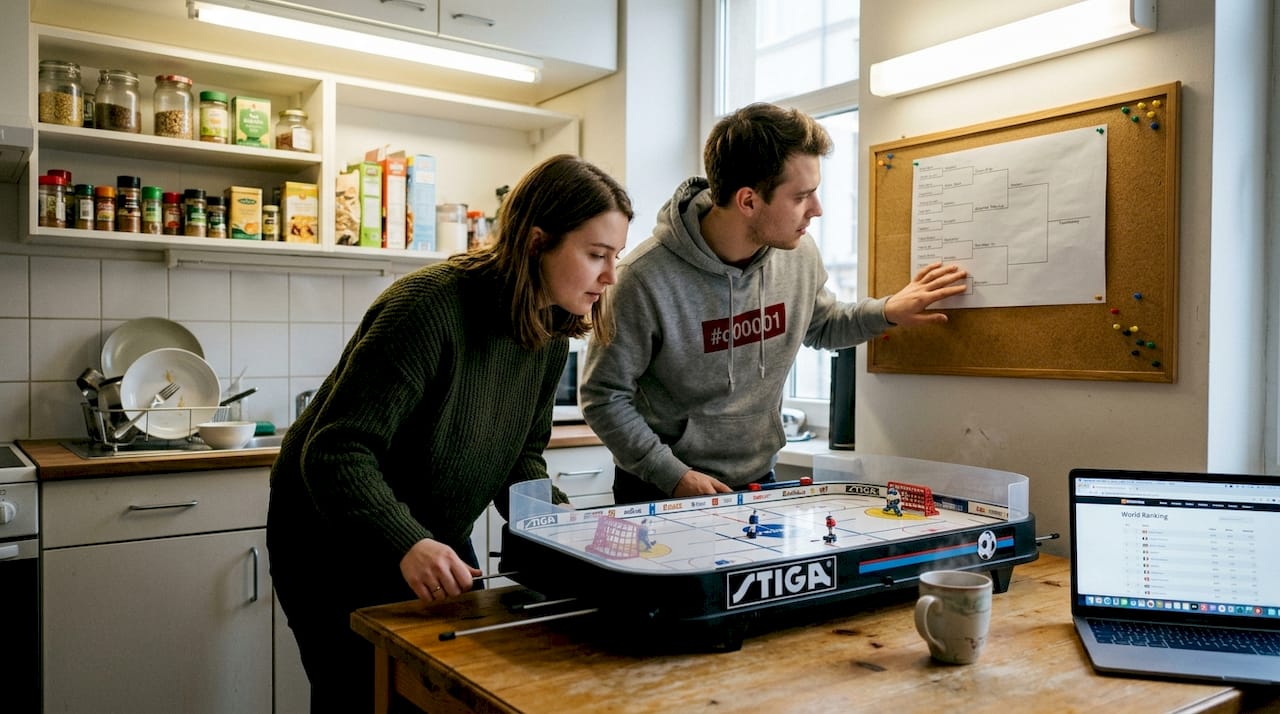
The table hockey scene in Europe continues evolving as new talent emerges from countries with growing competitive infrastructure. Players who master advanced table hockey skills can compete internationally regardless of their home country’s traditional strength in the sport.
Comparing famous players: style, achievements, and impact
Direct comparison reveals how different competitive environments shape legendary careers. The table below synthesizes key distinctions between top players across variants:
| Player | Variant | Peak Years | Major Titles | Geographic Impact | Playing Style |
|---|---|---|---|---|---|
| Carlo Bossio | Coleco | 2015-2026 | 11+ World | North America | Aggressive offense, tactical defense |
| Lou Marinoff | Coleco | 1978-1980, 2015 | 4+ Major | North America | Strategic positioning, experience |
| Edgars Caics | Stiga | 2010s | World Champion | Eastern Europe | Quick transitions, opportunistic |
| Kevin Eriksson | Stiga | 2010s-2020s | Multiple | Nordic region | Balanced approach, consistency |
Key differences between Stiga and Coleco competitive scenes include:
- Equipment design: Stiga uses flat figures while Coleco employs three-dimensional players on rods
- Playing surface: Stiga features dome configurations; Coleco uses flat surfaces with boards
- Strategic emphasis: Stiga rewards precise passing sequences; Coleco favors individual rod control
- Tournament structure: ITHF organizes global Stiga events; North American leagues govern Coleco
- Geographic concentration: Stiga dominates globally while Coleco remains primarily North American
Each legendary player has left a unique legacy. Bossio’s sustained dominance has set new standards for consistency in Coleco competition. Marinoff’s comeback inspired older players to return to competitive play. Caics helped establish Latvia as a table hockey powerhouse, while Eriksson maintains Finland’s reputation for producing technically skilled players. These individual contributions collectively elevate the sport’s profile and competitive standards.
Pro Tip: Follow current top players through league websites and social media to see how modern champions adapt classic techniques. Many post training videos and match analysis that reveal the thinking behind their success. Explore StigaAmerica alternatives to find equipment that matches your preferred playing style.
Explore table hockey and connect with the community
Whether you’re inspired by Bossio’s dominance, Marinoff’s comeback, or the international stars reshaping Stiga competition, Table Hockey Global provides everything you need to deepen your engagement with the sport. Our platform connects players worldwide, from beginners learning fundamentals to pros analyzing championship matches. You’ll find detailed player profiles, tournament coverage, and strategic guides that help you understand what separates good players from legends.
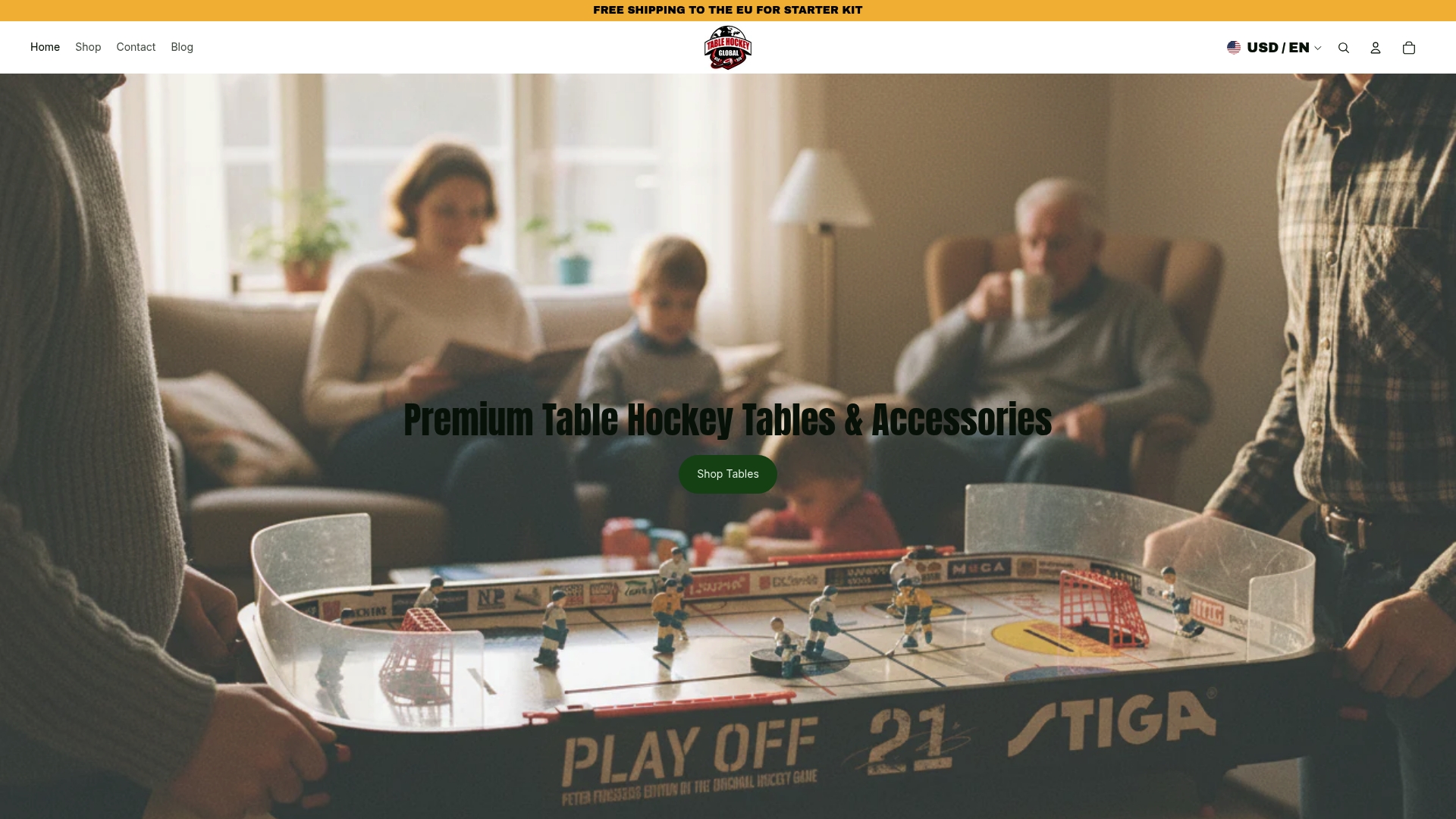
The table hockey statistics guide helps you track your favorite players and compare their achievements across seasons. Our European table hockey coverage keeps you updated on international tournaments and emerging talent. Join our community to discuss matches, share techniques, and connect with players who share your passion for this dynamic sport.
FAQ
Who is considered the greatest table hockey player of all time?
Carlo Bossio is considered the greatest Classic Coleco champion of all time, with eleven consecutive world championships demonstrating unmatched sustained excellence. In Stiga competition, former world champions like Edgars Caics from Latvia represent the highest achievement level. Lou Marinoff’s legacy includes both his 1970s dominance and his remarkable 2015 comeback at age 55.
What are the main variations of competitive table hockey?
Table hockey has two main variants: Stiga, which dominates globally through ITHF governance with strong European participation, and Coleco or rod hockey, which remains primarily North American-based with its own league structures. Stiga uses flat figures on a domed surface while Coleco employs three-dimensional players mounted on rods. Each variant has distinct rules, strategies, and competitive cultures that shape how players develop their skills.
How has international dominance in table hockey changed over time?
Swedish players dominated Stiga until approximately 2007, winning most world championships and setting competitive standards that others followed. Since then, Latvia, Ukraine, and Russia have emerged as table hockey powerhouses, producing world champions and top-ranked players. This geographic shift reflects improved training infrastructure, increased international competition, and the global spread of advanced techniques that were once concentrated in Scandinavia.
Can older players successfully compete at high levels in table hockey?
Lou Marinoff won a major US Open title at age 55 after a 23-year break from competitive play, demonstrating that table hockey rewards experience and strategic thinking. The sport’s emphasis on positioning, anticipation, and tactical awareness means that age can become an advantage rather than a limitation. Many competitive leagues include veteran divisions where players in their 50s, 60s, and beyond compete at high levels against peers who share decades of experience.
Recommended
- Table hockey statistics guide: players and fans 2026 – Table Hockey Global
- Table Hockey in Europe: Your Guide to the Thriving Scene – Table Hockey Global
- Top 4 hockeytablegames.com Alternatives 2026 – Table Hockey Global
- Master advanced table hockey play: skills and strategies 2026 – Table Hockey Global