

Choosing between table hockey and air hockey can feel overwhelming when both games promise exciting hockey action for your family. While many parents assume these games are interchangeable entertainment options, they actually deliver completely different experiences that suit distinct play styles and household needs. Air hockey emphasizes lightning-fast reflexes and high-energy competition, while table hockey rewards strategic thinking and precise puck control through rod manipulation. Understanding these core differences helps you select the perfect game that matches your family’s space, energy levels, and developmental goals for memorable bonding moments.
Table of Contents
- Key takeaways
- Understanding air hockey: fast-paced reflex fun
- Exploring table hockey: strategic rod-control gameplay
- Comparing gameplay, equipment, and family suitability
- Tips for families: choosing and enjoying your hockey game
- Explore premium table hockey options at Table Hockey Global
- FAQ
Key Takeaways
| Point | Details |
|---|---|
| Fast pace play | Air hockey emphasizes lightning fast reflexes and high energy competition. |
| Strategic rod control | Table hockey rewards strategic thinking and precise puck handling through rod manipulation. |
| Space and power needs | Air hockey requires a dedicated space and an electrical outlet for the blower, while table hockey is more portable and manual. |
| Generational bonding | Both games offer bonding moments but appeal to different ages and energy levels. |
| Rule driven differences | Air hockey imposes a seven second shot rule and prohibits goaltending, creating a fast paced game. |
Understanding air hockey: fast-paced reflex fun
Air hockey transforms ordinary family game nights into electrifying competitions where speed and reflexes reign supreme. The game features a perfectly smooth surface with tiny air jets creating a frictionless cushion that allows the puck to glide effortlessly across the table. Players grip hand-held mallets, striking a lightweight puck back and forth in rapid exchanges that test reaction times and anticipation skills.
The objective is straightforward yet thrilling: score seven points before your opponent by sending the puck past their defensive zone into the goal slot. Gameplay emphasizes speed and reflexes as the hovering puck can reach incredible velocities, demanding split-second decisions and lightning-fast mallet movements. This creates an adrenaline-pumping atmosphere that keeps players fully engaged from the opening face-off to the final point.
Air hockey tables typically measure seven to eight feet in length, requiring dedicated space in your game room or basement. The built-in electric blower fan needs a nearby power outlet to maintain consistent air pressure across hundreds of tiny surface holes. Without this constant airflow, the puck loses its signature glide and the game becomes sluggish and frustrating.
The rules include fascinating nuances that maintain fair play and competitive balance. Players must execute shots within seven seconds of gaining puck possession, preventing stalling tactics that slow the action. Goal tending, where a player hovers their mallet directly over their goal opening, is strictly prohibited and results in point penalties. These regulations keep matches moving at their characteristic breakneck pace.
Pro Tip: Master the triangle defense technique by positioning your mallet in a triangular pattern that covers the most goal area while staying mobile enough to counterattack. Combine this with bank shots that ricochet off side rails at unexpected angles to catch opponents off guard and rack up points quickly.
The game’s appeal extends across age groups, though it particularly resonates with teenagers and adults who crave competitive intensity. The physical demands of tracking a fast-moving puck and executing precise strikes make air hockey excellent for developing hand-eye coordination and motor skills in older children. Younger kids may struggle initially with the speed but often grow into enthusiastic players as their reflexes sharpen through practice.
Exploring table hockey: strategic rod-control gameplay
Table hockey uses rods to control miniature players positioned across a scaled-down ice rink, creating a tactical experience that mirrors real hockey’s strategic depth. Instead of directly striking a puck with your hand, you manipulate metal or plastic rods that extend through the table, each rod controlling one or more player figures. This indirect control system fundamentally changes how you approach scoring opportunities and defensive positioning.
The gameplay rewards patience and calculated moves over raw speed. You must coordinate multiple rods simultaneously to advance the puck through passing sequences, set up shooting lanes, and block opponent attacks. Matches are played to a predetermined goal total, typically five or seven, mirroring authentic hockey scoring objectives. The slower pace allows players to think several moves ahead, anticipating opponent strategies and adjusting tactics mid-game.
Expert players master puck control through subtle rod movements that cradle the puck between player figures, creating possession opportunities that lead to quality scoring chances. Timing becomes crucial when releasing shots, as you must align your player figure’s stick with the puck at the precise moment for maximum power and accuracy. Banking shots off the curved corner boards adds another tactical dimension, allowing creative angles that bypass defensive formations.
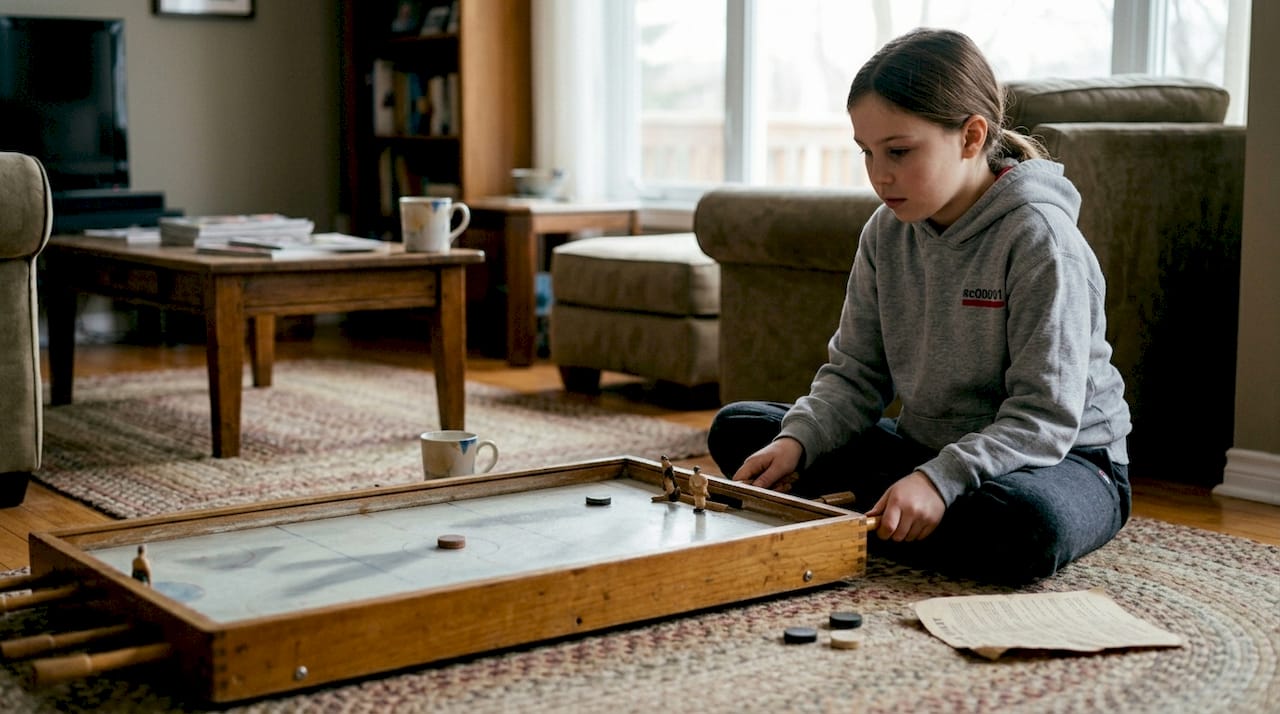
Table hockey’s portability advantage makes it accessible for families with limited space or those who want gaming flexibility. Many models fold for storage or feature compact tabletop designs that sit on existing furniture without requiring permanent floor space. The manual operation eliminates electrical dependencies, meaning you can play anywhere without hunting for outlets or dealing with power cords.
Bubble hockey variants elevate the experience with protective domes that enclose the playing surface, preventing puck escapes while adding visual appeal. These premium models often include electronic scoring displays and sound effects that enhance immersion. The dome design also allows for more aggressive play styles without constantly chasing runaway pucks across your room.
Pro Tip: Practice banking shots by aiming for the curved corner sections at 45-degree angles, which redirects the puck toward the goal at speeds defenders struggle to track. Combine this with quick rod switches between offense and defense to maintain pressure while protecting your own net from counterattacks.
| Skill Component | Beginner Focus | Advanced Technique |
|---|---|---|
| Puck Control | Single rod movements | Multi-rod coordination for passing plays |
| Shooting | Direct straight shots | Angled banks and deflections |
| Defense | Blocking shooting lanes | Reading opponent patterns, intercepting passes |
| Strategy | Reactive play | Proactive offensive zone pressure |
The competitive scene for table hockey includes international championships organized by the ITHF, where elite players demonstrate mind-blowing rod manipulation skills. This professional framework provides aspirational goals for serious enthusiasts while validating table hockey as a legitimate competitive pursuit. The strategic complexity supports cognitive development benefits for younger players who learn pattern recognition, spatial reasoning, and decision-making under pressure.
Comparing gameplay, equipment, and family suitability
The fundamental differences between these games extend far beyond surface appearances, impacting how they fit into your family’s lifestyle and entertainment preferences. Air hockey delivers instant high-energy fun but demands dedicated space and electrical infrastructure, while table hockey provides strategic depth with minimal setup requirements and maximum portability for mixed-age households.
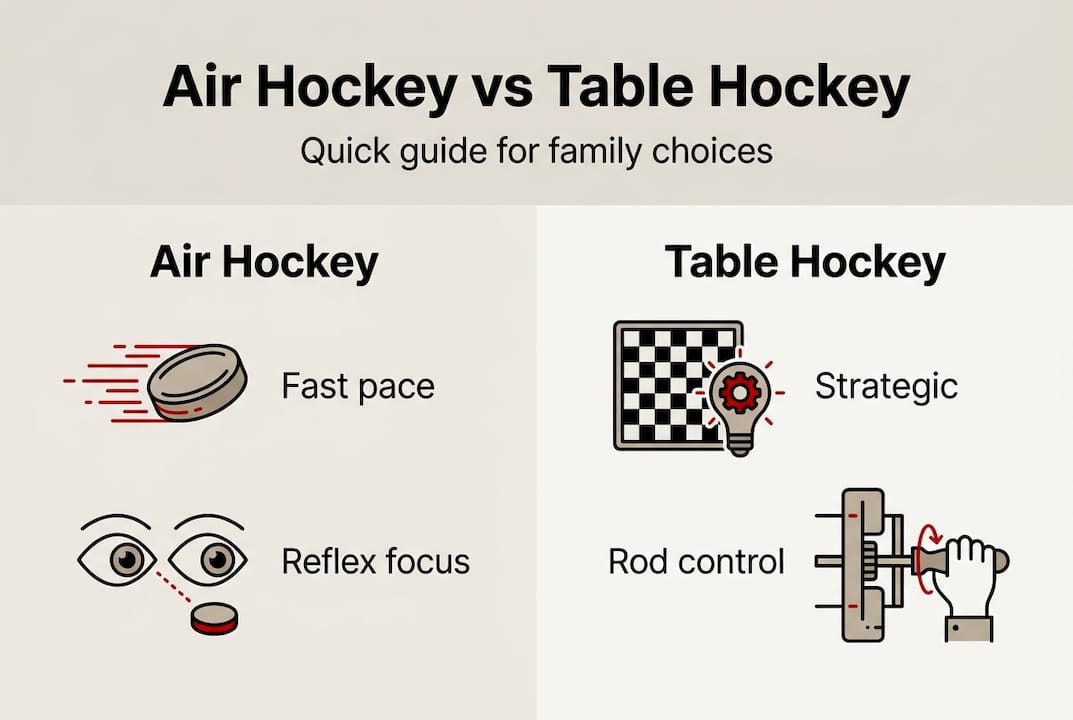
| Comparison Factor | Air Hockey | Table Hockey |
|---|---|---|
| Game Tempo | Rapid, continuous action with 7-second shot clock | Measured, thoughtful pace allowing strategic planning |
| Primary Skills | Reflexes, hand-eye coordination, anticipation | Strategy, timing, rod manipulation, puck control |
| Table Size | 7-8 feet, requires permanent floor space | 3-6 feet, often portable or foldable |
| Power Needs | 110V electrical outlet for blower fan | None, fully manual operation |
| Noise Level | Moderate to loud from blower and puck impacts | Quiet, conversation-friendly gameplay |
| Setup Time | Plug in and play within seconds | Immediate, no preparation needed |
| Age Range | 8+ years for competitive play | 5+ years through senior adults |
| Skill Ceiling | Moderate, mastered within months | High, years of strategic depth to explore |
| Maintenance | Blower cleaning, surface care | Minimal, occasional rod lubrication |
Air hockey excels in social settings where quick tournament brackets and rotating players create dynamic energy. The fast matches mean everyone gets multiple turns without long waiting periods. However, the noise from the blower fan and puck collisions can disrupt nearby activities, making it less suitable for open-concept living spaces or late-night play sessions.
Table hockey’s quieter operation integrates seamlessly into family routines without dominating the acoustic environment. Parents appreciate how the strategic gameplay naturally teaches patience and critical thinking while keeping children engaged for extended periods. The manual control system also eliminates concerns about electrical safety around younger siblings or pets.
- Air hockey requires climate control considerations since humidity affects puck glide quality and surface consistency
- Table hockey performs reliably in any environment without temperature or moisture sensitivity
- Replacement parts for air hockey, particularly blower motors, cost significantly more than table hockey components
- Table hockey’s simpler mechanical design means fewer potential failure points and longer lifespan
Both games foster family bonding through shared competition and skill development, but they appeal to different household dynamics. Families seeking high-intensity recreation that burns energy quickly gravitate toward air hockey’s athletic demands. Those prioritizing thoughtful interaction that builds social and developmental skills over multiple age groups find table hockey’s inclusive design more valuable for long-term engagement.
Tips for families: choosing and enjoying your hockey game
Selecting the right hockey game starts with honest assessment of your available space and household dynamics. Measure your potential game area carefully, accounting for player movement around all sides of the table plus clearance for swinging mallets or operating rods comfortably. Air hockey demands at least two feet of clearance on each side, while table hockey functions well in tighter configurations.
Power access becomes critical for air hockey installations. Identify nearby outlets that can handle continuous electrical draw without overloading circuits shared with other appliances. Extension cords create tripping hazards and may not deliver adequate power for optimal blower performance. Table hockey eliminates these infrastructure concerns entirely, offering placement flexibility that adapts to changing room layouts.
- Evaluate your children’s current energy levels and attention spans to match game pace appropriately
- Consider noise tolerance in your household, especially for apartments or shared living spaces
- Calculate total ownership costs including electricity, maintenance, and eventual replacement parts
- Test both game types at arcades or friends’ homes before committing to a purchase
- Research table dimensions carefully, as “regulation” sizes vary significantly between manufacturers
- Read verified customer reviews focusing on durability and long-term satisfaction rather than initial excitement
- Plan dedicated storage solutions if choosing portable models to prevent damage and maintain accessibility
Encourage skill development by establishing family learning sessions where everyone practices fundamental techniques together. For air hockey, work on defensive positioning and shot accuracy through structured drills. With table hockey, focus on smooth rod movements and passing combinations that create scoring opportunities. These shared learning experiences build competence while strengthening family bonds through mutual improvement.
Pro Tip: Rotate between both game types if budget and space allow, giving your family exposure to reflex training and strategic thinking in complementary ways. This variety prevents boredom while developing well-rounded cognitive and physical skills that transfer to other activities and sports.
Schedule regular family tournament nights with bracket systems that give everyone equal playing time regardless of skill level. Create handicap systems for matches between adults and children, such as requiring parents to score more goals or limiting their defensive movements. These accommodations keep competition balanced and fun without diminishing the challenge for more experienced players.
Involve children in table maintenance and setup routines to build ownership and responsibility. Assign age-appropriate tasks like wiping down playing surfaces, organizing equipment, or tracking tournament statistics. These participation opportunities teach valuable life skills while increasing investment in family game traditions that create lasting memories.
All ages benefit from coordination development through regular play, with improvements visible within weeks of consistent practice. Track progress through friendly record-keeping that celebrates personal bests and improvement milestones rather than only focusing on head-to-head victories.
Explore premium table hockey options at Table Hockey Global
Now that you understand the strategic advantages and family benefits of table hockey, finding the right equipment becomes your next priority. Table Hockey Global serves as the world’s largest community dedicated to connecting players from beginners to professionals, offering carefully curated table selections that match every skill level and household need. Whether you’re introducing young children to their first competitive game or seeking tournament-grade equipment for serious play, the expert guidance available helps you make confident purchasing decisions.
The platform provides comprehensive resources covering equipment maintenance, skill progression frameworks, and community connection opportunities that extend far beyond the initial purchase. Access detailed buying guides that explain material quality differences, size considerations, and feature comparisons across price points. Join a global network of enthusiasts who share training tips, organize virtual competitions, and celebrate the tactical depth that makes table hockey endlessly engaging for families worldwide.
FAQ
Which game is better for young children, table hockey or air hockey?
Table hockey suits young children better due to its slower, controlled pace that allows developing minds to process gameplay without overwhelming sensory input. The strategic elements naturally teach patience, planning, and cause-effect relationships that support cognitive growth. Air hockey works well for children aged eight and older who have developed sufficient reflexes and hand-eye coordination to track fast-moving objects safely.
Do air hockey tables require special installation or power sources?
Air hockey requires standard electrical outlets to power the internal blower fan that creates the signature air cushion for puck movement. Most residential tables operate on 110V household current without special wiring, though you should verify the circuit can handle continuous operation without tripping breakers. Table hockey operates entirely through manual rod manipulation, eliminating all electrical dependencies and allowing play anywhere without infrastructure concerns.
Can playing table or air hockey improve my child’s skills?
Both games deliver measurable skill improvements through regular play. Air hockey sharpens reflexes, hand-eye coordination, and spatial tracking abilities that transfer to other sports and activities. Table hockey develops strategic thinking, problem-solving capabilities, and fine motor control through precise rod manipulation. The cognitive benefits of table hockey extend deeper into executive function development, including planning, pattern recognition, and adaptive thinking under competitive pressure.
What space considerations should I keep in mind before buying?
Air hockey demands substantial dedicated floor space, typically requiring a 10-by-6-foot area minimum when accounting for player movement and mallet swings around a standard table. The blower fan generates noise that may disturb adjacent rooms or sleeping family members. Table hockey offers flexible placement options with compact models fitting on existing tables or folding for storage between play sessions, making it ideal for apartments or multi-purpose rooms where permanent installations aren’t practical.
Recommended
- Why Table Hockey is a Game-Changer for Child Development: Backed by Re – Table Hockey Global
- Table hockey statistics guide: players and fans 2026 – Table Hockey Global
- Master advanced table hockey play: skills and strategies 2026 – Table Hockey Global
- Why Table Hockey is a Game-Changer for Your Kid’s Brain and Skills – Table Hockey Global
- Top 4 Party Games for Families Comparison 2026 - The World Game