

Finding meaningful ways to connect with your children can feel overwhelming when you’re juggling work, household responsibilities, and limited space. Many parents struggle to identify activities that genuinely engage kids while fostering teamwork and communication skills. Table hockey emerges as a practical solution, offering interactive play that fits into busy schedules without requiring extensive space or complicated setup. This compact game transforms ordinary evenings into opportunities for genuine connection, skill development, and shared laughter. Whether you’re seeking screen-free alternatives or simply want to strengthen family bonds, table hockey provides an accessible pathway to create lasting memories while teaching valuable life skills through play.
Table of Contents
- Key takeaways
- How to evaluate table hockey for family team building
- Top team-building methods with table hockey
- Comparing rod hockey and air hockey for team building
- Developing skills and social benefits through table hockey
- Discover table hockey games for your family
- FAQ
Key Takeaways
| Point | Details |
|---|---|
| Family bonding through play | Table hockey enables parent child collaboration and shared laughter, turning games into moments that strengthen communication and connection. |
| Compact design | Look for a compact table or tabletop version that fits your space and can be set up quickly for busy evenings. |
| Affordable and durable | Balance price and quality to ensure ongoing use rather than a one off purchase. |
| Age appropriate play | Choose options suited for children four and up so rules are simple enough for beginners and more challenging for older kids. |
| Test puck glide | Before buying, test the puck glide to ensure smooth play and fair competition. |
How to evaluate table hockey for family team building
Selecting the right table hockey setup requires understanding what matters most for your family’s unique dynamics and space constraints. The ideal game balances quality, affordability, and engagement potential while fitting seamlessly into your home environment.
Compact design stands as a primary consideration for busy families. Look for tables that fit comfortably in living rooms, basements, or playrooms without dominating the space. Tabletop versions offer excellent portability, allowing you to store them easily when not in use. This flexibility ensures the game remains accessible rather than becoming an obstacle in your daily routine.
Age suitability plays a crucial role in maximizing engagement. Table hockey fosters parent-child connection through competitive yet collaborative play, encouraging communication, sportsmanship, and shared excitement ideal for busy parents. Games designed for children aged 4 and up typically feature simplified rules and safety considerations that make learning intuitive. Younger children benefit from adult guidance during initial sessions, while older kids quickly grasp strategic elements that deepen their interest.
Consider these essential factors when evaluating options:
- Equipment quality affects longevity and gameplay smoothness, with sturdy construction ensuring years of family fun
- Setup simplicity matters for spontaneous play sessions, especially on busy weeknights
- Game format flexibility allows you to adapt challenges as children grow and skills develop
- Price point should align with your budget while delivering genuine value through repeated use
Pro Tip: Test the puck’s glide quality before purchasing. A smooth, consistent surface ensures fair play and reduces frustration during competitive matches, keeping everyone engaged and motivated.
The right table hockey game becomes more than entertainment. It transforms into a tool for building hand-eye coordination and social skills while creating natural opportunities for meaningful conversations. When evaluating options, prioritize features that support your family’s specific needs rather than chasing elaborate bells and whistles that may go unused. Understanding the differences between table hockey vs air hockey helps you make an informed choice that aligns with your team-building goals.
Top team-building methods with table hockey
Implementing effective gameplay strategies transforms casual table hockey sessions into powerful team-building experiences that strengthen family connections and develop valuable skills.
Family game nights with tournaments and variations like one-hand challenges or timed matches promote interaction and friendly competition. These structured approaches create anticipation and excitement while teaching children about preparation, focus, and gracious winning or losing.
-
Establish regular family game nights by designating specific evenings for table hockey sessions. Consistency builds anticipation and ensures everyone prioritizes this shared activity. Rotate between cooperative formats where family members work together against the clock and competitive matches that spark friendly rivalry.
-
Organize mini-tournaments with brackets and point systems. Create a simple championship structure that spans several weeks, allowing children to experience the thrill of progression and achievement. This format naturally encourages goal-setting and perseverance while maintaining engagement over time.
-
Introduce skill-building challenges such as one-handed play or speed rounds. These variations level the playing field between parents and children, creating genuine competition regardless of age or experience. Timed matches add urgency and excitement, helping kids develop quick decision-making abilities.
-
Rotate team partnerships to foster communication across different family combinations. Pairing siblings together one week and parent-child duos the next encourages adaptability and collaboration. This approach prevents predictable dynamics and keeps everyone mentally engaged.
-
Implement progressive difficulty levels by adjusting rules as skills improve. Start with basic scoring and gradually introduce banking shots, defensive strategies, or speed requirements. This scaffolded approach maintains appropriate challenge levels that prevent boredom or frustration.
Pro Tip: Keep a family scoreboard visible in your game area. Tracking wins, personal bests, and tournament standings creates ongoing motivation and gives children tangible evidence of their improvement over time.
These methods work because they balance structure with flexibility, allowing you to adapt based on energy levels, available time, and individual preferences. The key lies in maintaining consistency while introducing enough variety to keep sessions fresh and exciting. For families ready to deepen their strategic approach, exploring advanced table hockey skills opens new dimensions of gameplay that challenge even experienced players.
Comparing rod hockey and air hockey for team building
Understanding the distinctions between rod hockey and air hockey helps you select the format that best supports your family’s team-building objectives and play style preferences.
| Feature | Rod Hockey | Air Hockey |
|---|---|---|
| Gameplay mechanism | Rod-controlled player figures | Frictionless puck on air cushion |
| Skill emphasis | Strategic positioning, teamwork | Speed, reflexes, quick reactions |
| Learning curve | Moderate, rewards practice | Quick to learn, harder to master |
| Team play support | Excellent for structured collaboration | Better for fast-paced individual matches |
| Space requirements | Compact tabletop options available | Requires flat surface, some versions bulky |
| Price range | Generally more affordable | Mid to high range depending on features |
| Noise level | Quieter operation | Can be louder due to air blower |
Air hockey emphasizes speed and reflexes while rod hockey focuses on strategy and teamwork, with rod hockey better suited for structured team play. This fundamental difference shapes how each game facilitates family interaction and skill development.
Rod hockey excels at promoting deliberate teamwork because players must coordinate movements and communicate strategies to control multiple figures effectively. The mechanical nature of rod control creates natural pauses that allow for discussion and planning, making it ideal for teaching children about collaborative problem-solving. Parents appreciate how this format encourages patience and tactical thinking rather than pure reaction speed.
Air hockey delivers high-energy excitement that captivates children who thrive on fast-paced action. The frictionless puck creates dynamic gameplay that keeps everyone alert and engaged. While less inherently collaborative than rod hockey, air hockey builds valuable reflexes and hand-eye coordination through its demanding pace. Quick rounds mean more family members can participate in shorter time windows.
Consider these factors when choosing between formats:
- Rod hockey suits families seeking structured, strategic play that emphasizes communication
- Air hockey appeals to households wanting energetic, reflex-driven competition
- Younger children often find rod hockey more accessible due to its controlled pace
- Space-constrained homes benefit from compact rod hockey tabletop versions
- Budget-conscious families typically find rod hockey more affordable
Both formats deliver genuine team-building benefits, but your choice should reflect your family’s personality and goals. If fostering strategic thinking and collaborative planning ranks high, rod hockey provides superior structure. For families prioritizing physical activity and quick engagement, air hockey offers immediate excitement. Many parents eventually invest in both formats to provide variety, but starting with one allows you to establish routines before expanding options. The comprehensive comparison of table hockey vs air hockey explores additional nuances that inform this important decision.
Developing skills and social benefits through table hockey
Regular table hockey play delivers measurable improvements in children’s physical abilities, social competence, and emotional well-being, supported by research on similar table sports.
Twelve-month training programs show improved motor coordination, reduced reaction time, increased self-efficacy and social competence, and decreased stress in children. While this research focused on table tennis, the parallel skill demands of table hockey suggest comparable benefits for young players engaging regularly with the game.
| Skill Area | Development Benefit | Timeline for Improvement |
|---|---|---|
| Hand-eye coordination | Enhanced tracking and response accuracy | 4-8 weeks of regular play |
| Reaction time | Faster processing of visual cues | 6-12 weeks with consistent practice |
| Motor control | Improved fine motor precision | 8-16 weeks of skill-focused sessions |
| Social competence | Better communication and sportsmanship | Ongoing with guided family interaction |
| Stress reduction | Lower anxiety through engaging activity | Immediate to 4 weeks |
Physical skill development occurs naturally through gameplay. Children refine their ability to track fast-moving objects while coordinating hand movements to intercept and redirect the puck. This simultaneous processing of visual information and motor response strengthens neural pathways that support academic tasks requiring similar coordination, such as writing or using tools.
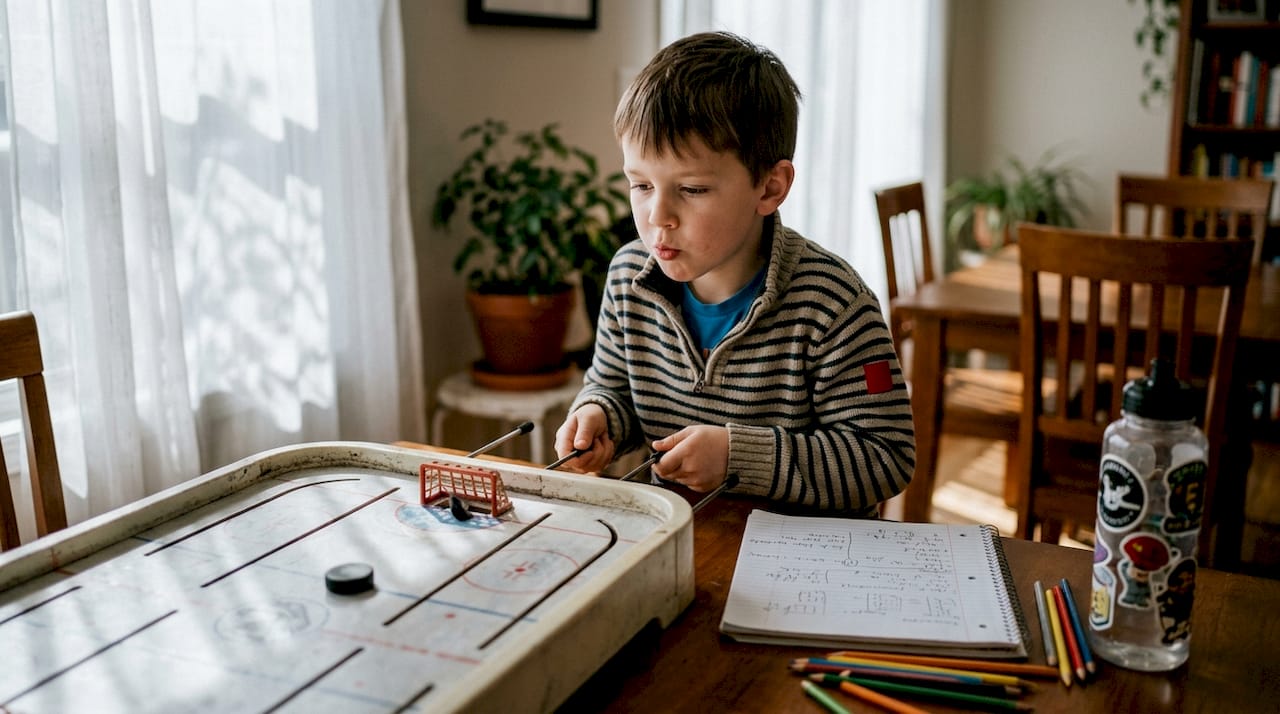
Social benefits emerge through the interactive nature of table hockey. Children learn to read opponents’ body language, anticipate moves, and adjust strategies accordingly. These micro-interactions build emotional intelligence and communication skills that transfer to classroom settings and peer relationships. The structured competition teaches gracious winning and losing, helping children develop resilience and perspective.
Expert strategies include perfecting grip, stance, timing, puck control, and banking shots while handling common challenges. Parents can accelerate skill development by focusing on these fundamentals:
- Demonstrate proper grip techniques that balance control with flexibility
- Encourage balanced stance positioning that allows quick lateral movement
- Practice timing drills that help children anticipate puck trajectory
- Introduce banking strategies gradually as basic skills solidify
- Address puck control challenges through targeted mini-games
Pro Tip: Create skill-specific challenges that isolate individual techniques. For example, practice defensive positioning for five minutes before starting a match, or focus an entire session on mastering bank shots from different angles.
The stress reduction benefits deserve particular attention for busy families. Table hockey provides a natural outlet for built-up tension from school pressures or social challenges. The focused engagement required during play creates a mindful state that temporarily displaces worries, while the physical activity releases endorphins that improve mood. Parents often notice children seem more relaxed and communicative after game sessions.
These combined benefits make table hockey more than entertainment. The game becomes a developmental tool that supports growth across multiple domains while strengthening family bonds. Understanding why table hockey transforms children’s abilities helps parents maximize these advantages through intentional play practices.
Discover table hockey games for your family
Ready to transform family time with engaging table hockey experiences? Finding the right equipment marks the first step toward building lasting memories and developing valuable skills together.
Table Hockey Global offers an extensive selection of games designed specifically for families seeking quality bonding time. Whether you need a compact tabletop version for apartment living or a full-sized table for dedicated game spaces, you’ll find options that match your requirements and budget. The community extends beyond products, connecting you with players worldwide who share tips, strategies, and encouragement for families just starting their table hockey journey.
Expert guidance helps you maximize your investment. The platform provides resources covering everything from basic rules to advanced techniques, ensuring your family progresses smoothly from beginners to confident players. High-quality equipment designed for durability means your table hockey game will serve your family for years, adapting as children grow and skills develop. Explore the full range of options and join a global community passionate about this engaging sport at Table Hockey Global.
FAQ
Is table hockey suitable for very young children?
Table hockey works well for children aged 4 and up with appropriate supervision and simplified rules. Younger kids benefit from adult guidance during initial sessions to learn basic mechanics and safety practices. Start with shorter game durations and focus on fun rather than competition to build positive associations. As children develop coordination and understanding, gradually introduce more complex rules and strategies that match their growing abilities.
How can I organize a family table hockey tournament?
Create a simple bracket system that accommodates all family members, scheduling matches over several weeks to build anticipation. Establish clear, consistent rules before starting and post them visibly to prevent disputes. Encourage sportsmanship by celebrating good plays from all participants, not just winners. Consider implementing a point system that rewards improvement and effort alongside victories, ensuring younger or less experienced players stay motivated throughout the tournament.
What skills will my child develop playing table hockey?
Regular play significantly improves hand-eye coordination as children track and respond to fast-moving pucks. Reaction time decreases through repeated practice anticipating and intercepting shots. Social skills including communication, turn-taking, and gracious competition develop naturally through family matches. The focused engagement reduces stress and anxiety while building self-efficacy as children master new techniques. These combined benefits support both physical development and emotional growth. Learn more about how table hockey transforms children’s abilities through consistent play.
Can table hockey replace screen time effectively?
Table hockey provides compelling screen-free entertainment that engages children through active participation rather than passive consumption. The social interaction inherent in gameplay supports communication skills and emotional development that screens cannot replicate. Physical movement and hand-eye coordination requirements offer health benefits absent from sedentary screen activities. Most children readily embrace table hockey once they experience the excitement and connection it provides. Discover additional benefits of screen-free play with table hockey for comprehensive family wellness.
Recommended
- Why Table Hockey is a Game-Changer for Your Kid’s Brain and Skills – Table Hockey Global
- Why Table Hockey is a Game-Changer for Child Development: Backed by Re – Table Hockey Global
- Screen-Free Wins: How Table Hockey Boosts Kids’ Social and Development – Table Hockey Global
- Table hockey vs air hockey: best family game for 2026 – Table Hockey Global