

You might assume player fees cover everything in table hockey, but the reality is far different. Behind every tournament and youth program lies a web of expenses that registration alone can’t meet. From costly equipment to venue rentals and meals, the financial demands quickly add up. For parents hoping to enroll their kids and adults seeking competitive play, understanding why sponsors are essential reveals how the sport survives and expands. This article breaks down the hidden costs, explains how sponsorships bridge funding gaps, and shows what sponsors gain by supporting table hockey’s growth.
Table of Contents
- Key takeaways
- The hidden costs of playing table hockey
- Why sponsors are vital for youth and adult table hockey programs
- Comparing table hockey sponsorship to other sports
- How sponsorships support table hockey’s growth and what sponsors gain
- Discover how you can support or get involved with table hockey
- Frequently asked questions
Key Takeaways
| Point | Details |
|---|---|
| Costs exceed fees | Registration fees do not cover venues meals equipment maintenance or insurance, creating a funding gap. |
| Sponsorship bridges funding | Sponsors provide critical funding for equipment facilities travel subsidies and program operations that fees alone cannot cover. |
| Inclusion through sponsorship | Sponsorship helps families afford participation by reducing fees or offering sliding scales for children ages 6 to 16. |
| Growth depends on sponsors | The international table hockey ecosystem relies on sponsor funding to run clinics tournaments and scholarships. |
The hidden costs of playing table hockey
Organizing a table hockey event or running a youth program involves far more than collecting player fees. Venue rentals, hotel group rates, lunches, and equipment maintenance create expenses that quickly exceed what participants pay. Hotels typically charge between $132 and $142 per night for group bookings, while meal costs hover around 15 EUR per lunch. Multiply these figures across a weekend tournament with dozens of players, and the budget balloons.
Equipment represents the largest single expense. A quality table hockey table costs approximately $2,500, and outfitting a facility with 27 tables reaches $67,500. These aren’t one-time purchases either. Tables require regular maintenance, replacement parts, and eventual upgrades as technology improves. For youth programs aiming to provide affordable access to children aged 6-16, high equipment and facility costs force organizers to seek sponsorships or grants. Without external funding, registration fees would climb so high that many families couldn’t participate.
Player fees alone create a significant funding gap. Consider a local club charging $50 per player for a season. With 40 participants, that’s $2,000 in revenue. Now factor in venue rental at $300 per session for 20 weeks ($6,000), equipment maintenance ($1,500), insurance ($800), and promotional materials ($400). The club faces an $8,700 budget with only $2,000 covered by fees. That $6,700 shortfall must come from somewhere, and sponsors fill this critical void.
Youth programs face especially steep challenges. Parents want their kids to develop strategic thinking and hand-eye coordination through table hockey, but affordability determines participation. Effective budgeting requires accounting for hidden recurring costs that sneak up on organizers:
- Replacement pucks and player figures that wear out monthly
- Cleaning supplies and table surface treatments for optimal play
- Electricity and climate control for practice facilities
- Administrative software for scheduling and communication
- Travel subsidies for competitive players attending regional events
Pro Tip: Track every expense for three months to identify your true cost per player. Many organizers discover their actual expenses run 40-60% higher than initial estimates, revealing exactly how much sponsor support they need.
| Expense Category | Estimated Cost | Frequency | Annual Total |
|---|---|---|---|
| Venue rental | $300/session | 20 weeks | $6,000 |
| Equipment maintenance | $125/month | Monthly | $1,500 |
| Tables (depreciation) | $2,500/table | 5-year life | $13,500 |
| Insurance | $800/year | Annual | $800 |
| Marketing materials | $100/month | Monthly | $1,200 |
Why sponsors are vital for youth and adult table hockey programs
Sponsors don’t just write checks. They enable the entire ecosystem that makes table hockey accessible and enriching for players of all ages. Sponsors provide essential funding for skill development clinics where kids learn advanced techniques, tournaments that test competitive abilities, and scholarships that help families who couldn’t otherwise afford participation. Without this support, programs would either charge prohibitive fees or shut down entirely.
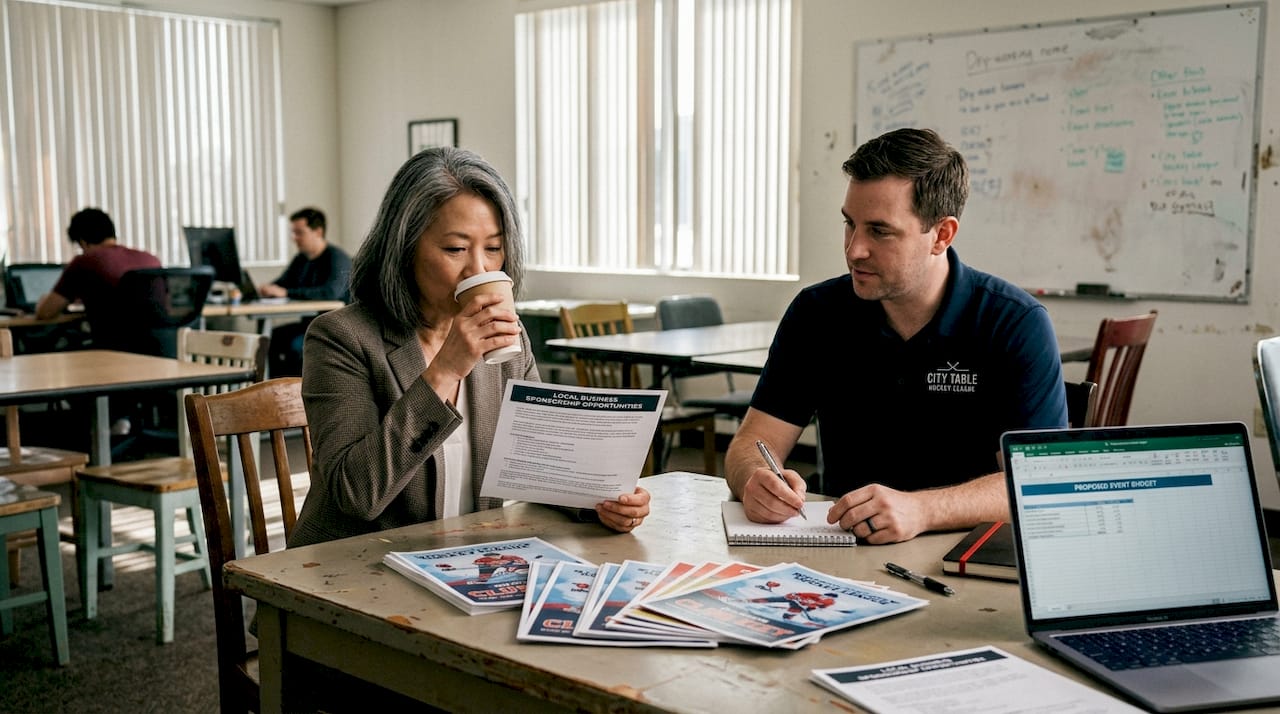
For families with children aged 6-16, sponsorship makes the difference between participation and exclusion. A single season can cost $200-$400 per child when you include registration, equipment, and travel. Multiply that by two or three kids, and many households simply can’t manage it. Sponsors absorb portions of these costs, allowing clubs to reduce fees or offer sliding scales based on family income. This financial breathing room means more children access the cognitive and social benefits table hockey provides.
Adult players gain just as much from sponsored programs. Table hockey demands complete mental focus, offering a powerful escape from daily stress and work pressures. Sponsored clubs can afford better facilities, longer operating hours, and organized leagues that create social connections among players. The cognitive benefits of strategic gameplay and the social engagement of regular competition contribute significantly to adult well-being, but these programs need funding to cover facility and equipment costs.
Sponsorship encourages program expansion and community inclusiveness in tangible ways. When a local business sponsors a youth league, the club can add beginner clinics, purchase additional tables, or extend the season by several weeks. These expansions attract new players who might have hesitated to join a smaller, less established program. The visibility and credibility that comes with sponsor backing signals quality and commitment to potential participants.
The relationship creates mutual benefits that strengthen both the sport and local businesses. Sponsors gain family-friendly exposure through jersey logos, facility banners, social media mentions, and event promotions. Parents attending tournaments see sponsor names repeatedly, building positive associations with brands that support their children’s development. For sponsors, this targeted visibility among engaged families often proves more valuable than generic advertising:
- Direct access to family decision makers in a positive context
- Community goodwill from supporting youth development
- Brand association with healthy, skill-building activities
- Networking opportunities with other local business sponsors
- Content for their own social media highlighting community involvement
Pro Tip: When approaching potential sponsors, prepare a one-page overview showing exactly how their contribution translates into player benefits. Concrete details like “Your $2,000 sponsorship provides equipment for 15 new youth players” resonate far more than vague promises of exposure.
Comparing table hockey sponsorship to other sports
Table hockey operates in a vastly different financial landscape than mainstream sports. Major sports like table tennis attract venture capital investments reaching millions of dollars, with celebrity backers and media deals driving revenue. Table hockey, by contrast, relies almost entirely on grassroots sponsorships from local businesses. This funding model reflects the sport’s niche status and limited media exposure, but it also creates opportunities for meaningful community partnerships.
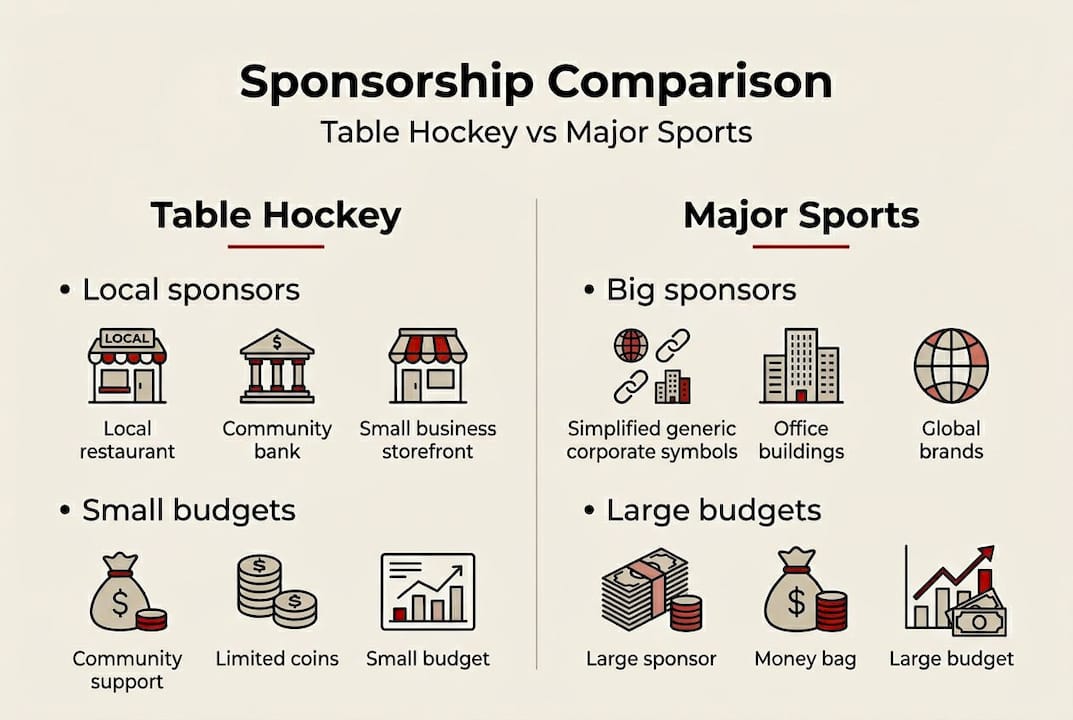
The reliance on local sponsors stems from practical realities. Table hockey lacks the television contracts and merchandise sales that fund bigger sports. With approximately 8,000 players worldwide organized into 400 clubs, the sport simply doesn’t generate mass market appeal that attracts corporate giants. Instead, community businesses, family-owned shops, and regional companies provide the financial backbone. These sponsors value direct community impact over broad market reach.
Grassroots funding proves essential precisely because of this niche size. A local restaurant sponsoring a youth table hockey league gains visibility among families in their immediate area, the exact demographic they serve. The $1,000 they invest goes directly to equipment and facility costs, creating tangible results they can see and promote. This localized approach builds authentic connections between sponsors and the growing table hockey community in ways that massive corporate sponsorships in major sports often can’t replicate.
Local sponsors gain community goodwill that translates into customer loyalty. When families see a business supporting their children’s development, they remember. They choose that restaurant for dinner, shop at that store, or recommend that service to friends. This targeted family-friendly branding creates returns that justify the investment, even without massive audience numbers. The personal connection matters more than reach.
Table hockey’s international growth trajectory requires steady sponsor support to maintain momentum. The sport has expanded significantly, with clubs forming across Europe, North America, and beyond. Sustaining this growth means funding international tournaments, supporting the International Table Hockey Federation’s development programs, and helping new clubs get established. Each of these initiatives depends on sponsors willing to invest in the sport’s long-term potential rather than immediate mass market returns.
Sponsorship packages in table hockey typically offer visibility through multiple channels:
- Banner placement at tournaments and practice facilities
- Logo inclusion on team jerseys and equipment
- Social media mentions across club and federation accounts
- Recognition in event programs and promotional materials
- Speaking opportunities at tournaments and community events
Pro Tip: Emphasize the personal touch when pitching table hockey sponsorships. Unlike sponsoring a professional team where the sponsor is one of dozens, local table hockey sponsors often become the primary supporter, receiving prominent recognition and direct thanks from grateful families.
| Aspect | Major Sports | Table Hockey |
|---|---|---|
| Primary funding | Venture capital, media deals | Local business sponsorships |
| Typical sponsor investment | $100,000+ | $500-$5,000 |
| Audience reach | Millions via broadcast | Hundreds locally, thousands online |
| Sponsor benefits | Mass market exposure | Targeted community goodwill |
| Relationship depth | Transactional | Personal, community-focused |
How sponsorships support table hockey’s growth and what sponsors gain
Sponsorships fuel table hockey’s expansion through direct investments in infrastructure and programs. Funding covers equipment purchases that allow clubs to add tables and accommodate more players. It enables tournament hosting that brings communities together and showcases competitive play. Player development programs, from beginner clinics to advanced strategy sessions, exist because sponsors provide the financial foundation. Without these contributions, growth would stall as clubs struggle to maintain current operations, let alone expand.
Scholarships and community outreach programs depend entirely on sponsor generosity. Many talented young players come from families that can’t afford registration fees, equipment, or travel costs. Sponsor-funded scholarships remove these barriers, ensuring that ability rather than income determines who participates. Community outreach introduces table hockey to schools, recreation centers, and underserved neighborhoods, planting seeds for future growth. These initiatives require dedicated funding that player fees simply can’t provide.
Sponsors receive tangible exposure through multiple channels that build brand recognition. Jerseys bearing sponsor logos turn players into walking advertisements at tournaments and practice sessions. Facility banners ensure every visitor sees sponsor names in association with positive, family-friendly activities. Event promotion through social media, email newsletters, and local media mentions extends sponsor visibility beyond physical spaces. This multi-channel approach creates repeated brand impressions that build familiarity and positive associations.
The cycle of mutual benefit operates through a clear sequence:
- Sponsor provides financial support for equipment, facilities, or programs
- Programs increase accessibility by reducing fees or expanding offerings
- More players participate, compete, and develop skills in a thriving community
- Sponsor gains positive brand perception and customer loyalty from grateful families
- Success stories and growth attract additional sponsors, strengthening the ecosystem
This virtuous cycle explains why initial sponsorships often lead to multi-year commitments. Sponsors see their investment creating real impact, and the community reciprocates with loyalty and appreciation. The relationship transcends simple advertising to become genuine partnership.
International tournaments and ITHF activities showcase the sport’s global potential while requiring substantial sponsor backing. Hosting an international event involves coordinating travel for players from multiple countries, securing large venues, providing meals and accommodations, and managing complex logistics. These costs far exceed what registration fees can cover, making sponsors absolutely essential. Yet these tournaments generate excitement, media coverage, and aspirational goals that inspire local players and attract new participants.
The visibility sponsors gain through banners, jerseys, and social media creates family-friendly brand exposure that money can’t easily buy elsewhere. Consider the impact: a parent watching their child compete sees the sponsor logo dozens of times over a tournament weekend. They associate that brand with their child’s joy, development, and achievement. That emotional connection influences purchasing decisions far more powerfully than a billboard or digital ad ever could.
“Sponsors don’t just fund table hockey. They become part of the community, sharing in victories, supporting development, and building relationships that last years. The return isn’t just brand visibility, it’s genuine connection with families who remember and reward that support.”
Pro Tip: Document sponsor impact with photos, testimonials, and specific metrics. Show sponsors exactly how many players their contribution supported, share stories of scholarship recipients, and highlight skill improvements their funding enabled. This concrete evidence of impact encourages continued and increased support.
Discover how you can support or get involved with table hockey
Table hockey stands at an exciting crossroads where growing recognition meets expanding opportunities. Whether you’re a parent exploring options for your child’s development, an adult player seeking competitive engagement, or a business owner considering community investment, now is the perfect time to connect with this dynamic sport. Table Hockey Global serves as the worldwide hub where beginners and pros alike find resources, connect with local clubs, and follow the sport’s international growth.
Explore programs and events that match your interests and location. Discover ways to support youth initiatives and local clubs through sponsorship opportunities that create meaningful community impact. Access skill development resources, tournament schedules, and the latest news about table hockey’s expansion across continents. Your involvement, whether as a player, parent, or sponsor, helps build the recognition and infrastructure that will take this mentally engaging, socially connecting sport to new heights.
Frequently asked questions
Why can’t player fees cover all table hockey costs?
Player fees typically cover only 20-40% of actual program costs. Equipment expenses, venue rentals, insurance, and maintenance create a funding gap that would require prohibitively high fees if passed entirely to participants. Sponsorships bridge this gap, keeping table hockey accessible to families at all income levels.
What do sponsors receive in return for supporting table hockey?
Sponsors gain visibility through jersey logos, facility banners, social media promotion, and event recognition. More importantly, they build community goodwill and positive brand associations with families who appreciate their support for youth development and adult recreational opportunities.
How much does it cost to sponsor a table hockey program?
Sponsorship levels typically range from $500 for basic support to $5,000 or more for title sponsorships. Even modest contributions make significant impact, funding equipment for several players or covering facility costs for multiple sessions. Flexible packages accommodate various business budgets.
Why is table hockey considered a niche sport?
With approximately 8,000 players worldwide across 400 clubs, table hockey lacks the mass market presence of mainstream sports. Limited media coverage and specialized equipment requirements keep the sport relatively small, though growing recognition and community building are expanding participation steadily.
Can sponsorships really help table hockey grow internationally?
Absolutely. International tournaments, federation development programs, and new club formation all depend on sponsor funding. As sponsorship increases, the sport can offer bigger prizes, host more tournaments, and attract new players, creating a growth cycle that builds recognition and participation globally.
How do I find table hockey opportunities in my area?
Visit Table Hockey Global to locate clubs, events, and programs near you. The platform connects players worldwide, from complete beginners to competitive pros, offering resources for skill development and community engagement regardless of your experience level.
Recommended
- Table hockey statistics guide: players and fans 2026 – Table Hockey Global
- Master advanced table hockey play: skills and strategies 2026 – Table Hockey Global
- Why Table Hockey is a Game-Changer for Child Development: Backed by Re – Table Hockey Global
- Table Hockey in Europe: Your Guide to the Thriving Scene – Table Hockey Global