

Table hockey is not a toy gathering dust in a corner. It is a competitive sport recognized internationally, played by thousands of families and serious competitors across more than 50 countries. Most parents in Europe think of it as a simple gift for kids. The reality is different. Table hockey has structured rules, official equipment, world championships, and a global community that welcomes everyone from complete beginners to seasoned pros. This guide covers what the game is, how it works, how it compares to similar games, and how your family can get started.
Table of Contents
- What is table hockey?
- How table hockey is played: Structure and rules
- How table hockey compares to other tabletop games
- The table hockey community: Popularity, events, and family impact
- Getting started: Building skills and connecting as a family
- Ready to play? Join the global table hockey movement
- Frequently asked questions
Key Takeaways
| Point | Details |
|---|---|
| More than a toy | Table hockey is a structured, internationally regulated sport, not just a children’s game. |
| Family bonding | Quick matches and team play make table hockey ideal for family fun and learning. |
| Thriving community | Over 8,000 players from 50+ countries compete and connect through tournaments and clubs. |
| Unique gameplay | Table hockey stands apart from air hockey or nok hockey with its rod-controlled figures. |
| Easy to start | Families can begin playing at home with minimal equipment and expand to local clubs for more involvement. |
What is table hockey?
Table hockey simulates ice hockey on a tabletop surface. Players control small hockey figures attached to rods, moving them across a miniature rink to pass, shoot, and defend. The game is rod-controlled, meaning each player manages several figures by pulling, pushing, and twisting the rods. This mechanical system is what separates table hockey from every other tabletop sport.
The International Table Hockey Federation (ITHF) governs competitive play worldwide. Stiga, the Swedish manufacturer, produces the official sets used in all sanctioned tournaments. If you want to check table hockey statistics for ranked players and country performance, the numbers show just how organized this sport has become.
Key features of table hockey:
- Rod-controlled figures simulate real hockey positions
- Each player controls one side of the rink
- Mechanical movements: push, pull, twist
- Official manufacturer: Stiga
- Governed by the ITHF
| Feature | Detail |
|---|---|
| Game type | Rod-controlled tabletop sport |
| Official equipment | Stiga Playoff table |
| Governing body | ITHF (International Table Hockey Federation) |
| Simulates | Ice hockey |
| Player count | 2 players (1 per side) |
“Table hockey is a competitive sport played on rod-controlled table hockey games manufactured by Stiga, simulating ice hockey.” — ITHF
The structure is simple enough for a child to learn in one afternoon. It is also deep enough that adults spend years refining their technique. That combination is rare in tabletop games.
How table hockey is played: Structure and rules
A standard match lasts 5 minutes of continuous time. The format mirrors ice hockey: face-offs at center, goals scored by getting the puck into the opponent’s net, and a winner determined by the highest score when time runs out. Official rules include no shaking the table, specific possession limits, goal crease restrictions, and sudden-death overtime if the score is tied.
Here is the basic sequence of a match:
- Players set up on opposite sides of the Stiga table
- A face-off starts play, with the puck dropped at center
- Players use rods to move figures, pass, and shoot
- No shaking or lifting the table is allowed
- Possession rules prevent stalling; you cannot hold the puck indefinitely
- A goal does not count within 3 seconds of a face-off
- If tied after 5 minutes, sudden-death overtime decides the winner
Statistic: Surface speed is a regulated factor in official play. The Stiga table must be set to factory surface speed to ensure fair conditions for both players. This detail matters more than most beginners expect.
For casual family play, you do not need to follow every rule. Start with the basics: face-offs, no table shaking, and standard scoring. As your kids get comfortable, introduce possession rules and timed matches. Learning the table hockey grip early makes a real difference in control and accuracy.
Pro Tip: Practice faceoff techniques before your first family tournament. Winning the face-off consistently gives a measurable advantage in short 5-minute matches.
How table hockey compares to other tabletop games
Parents often confuse table hockey with air hockey or nok hockey. They are different games with different mechanics and different experiences. Understanding the distinctions helps you choose the right game for your family and set accurate expectations.
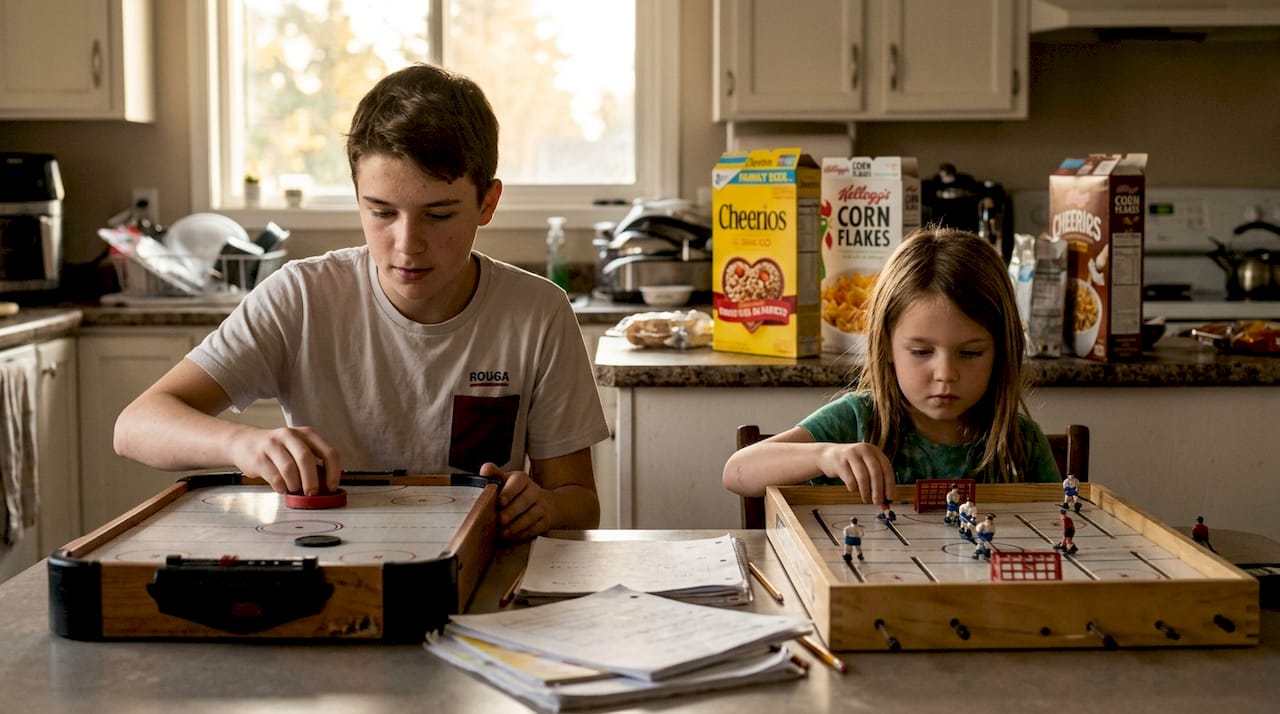
Table hockey uses rods and figures, while air hockey relies on a frictionless puck gliding on an air-cushion surface, controlled by handheld paddles. Nok hockey is a simpler wooden board game where players use paddles to knock a puck into a goal. Neither air hockey nor nok hockey involves controlling individual player figures.
| Game | Control method | Player figures | Team simulation | Competitive structure |
|---|---|---|---|---|
| Table hockey | Rods | Yes | Yes | ITHF regulated |
| Air hockey | Paddles | No | No | Informal |
| Nok hockey | Paddles | No | No | Informal |
What makes table hockey unique:
- You control a full team of figures, not just a single paddle
- Mechanical rod control requires coordination and strategy
- The game mirrors real ice hockey tactics
- It has an official international governing body
- Tournaments run at local, national, and world levels
For families interested in table hockey trends, the sport is growing in organized play while air hockey and nok hockey remain largely recreational. Table hockey is the only one of the three with a structured path from beginner to world-level competition.
The table hockey community: Popularity, events, and family impact
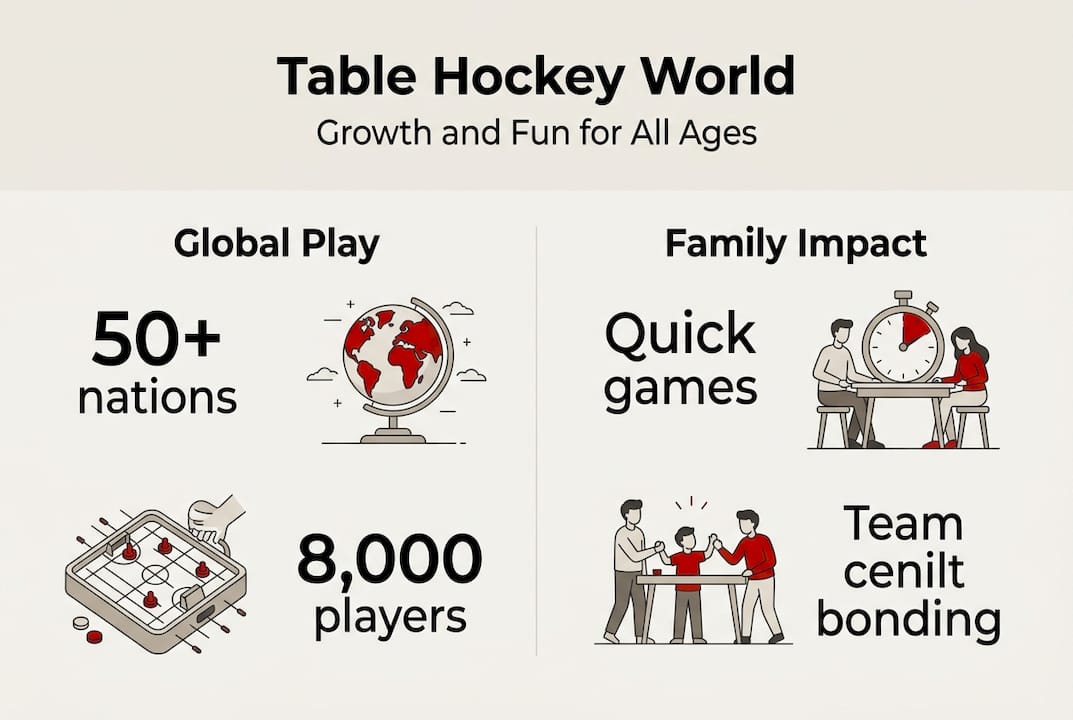
Table hockey has over 8,000 ranked players from more than 50 countries. The sport is especially strong in Northern and Eastern Europe, with Sweden, Finland, Czechia, Latvia, Ukraine, and Russia producing many of the top-ranked players. But the community extends far beyond those countries.
| Region | Notable countries | Community strength |
|---|---|---|
| Northern Europe | Sweden, Finland | Very strong |
| Eastern Europe | Czechia, Latvia, Ukraine | Strong |
| Western Europe | Germany, France, Netherlands | Growing |
| Global | USA, Canada, Australia | Emerging |
World Championships are held every two years. Weekly tournaments run in many cities. Junior divisions are a standard part of most events, meaning your children are not just tolerated at these events. They are expected and welcomed.
“Events welcome juniors, building skills and friendships globally.” — ITHF
For European parents, the European table hockey scene is particularly accessible. Local clubs in Scandinavia and Central Europe run beginner-friendly sessions. Kids develop focus, hand-eye coordination, strategic thinking, and sportsmanship through regular play. These are skills that transfer well beyond the table.
Pro Tip: Look into family participation programs in your country. Many national federations offer reduced entry fees for juniors and family pairs at local tournaments.
Getting started: Building skills and connecting as a family
Starting is straightforward. You need a Stiga table, two players, and about 30 minutes for a first session. Most families find the basics easy to pick up. The challenge comes in refining technique over time, which is where the game stays interesting for years.
Here is a practical starting sequence:
- Purchase a Stiga Playoff table (the standard for both casual and competitive play)
- Set up the table on a flat, stable surface
- Play your first match using only basic rules: face-offs, no table shaking, standard scoring
- Introduce possession rules and timed matches after a few sessions
- Watch tutorial videos and read guides on shooting and passing mechanics
- Look for a local club or beginner tournament in your area
- Register with your national table hockey federation to access ranked play
For skill development, focus on three areas first: rod control, shooting accuracy, and defensive positioning. The advanced table hockey techniques guide covers these in detail once you are past the basics. Tracking your improvement is also useful. Use a simple log or the tools available to track table hockey progress and measure how your game develops over weeks and months.
Table hockey fosters family bonding through quick, exciting matches. A 5-minute game fits into any schedule. You can play before dinner, on a weekend morning, or as a break during a long day. The format is flexible enough for casual fun and structured enough for serious practice.
Pro Tip: Set up a simple family league at home. Track wins and losses over a month. It adds motivation for kids and gives everyone a reason to keep practicing.
Ready to play? Join the global table hockey movement
When your family is ready to make table hockey a regular activity, the next steps are simple. Table Hockey Global is the world’s largest table hockey community, built for players at every level. From equipment guides to tournament listings, everything you need to get started is in one place.
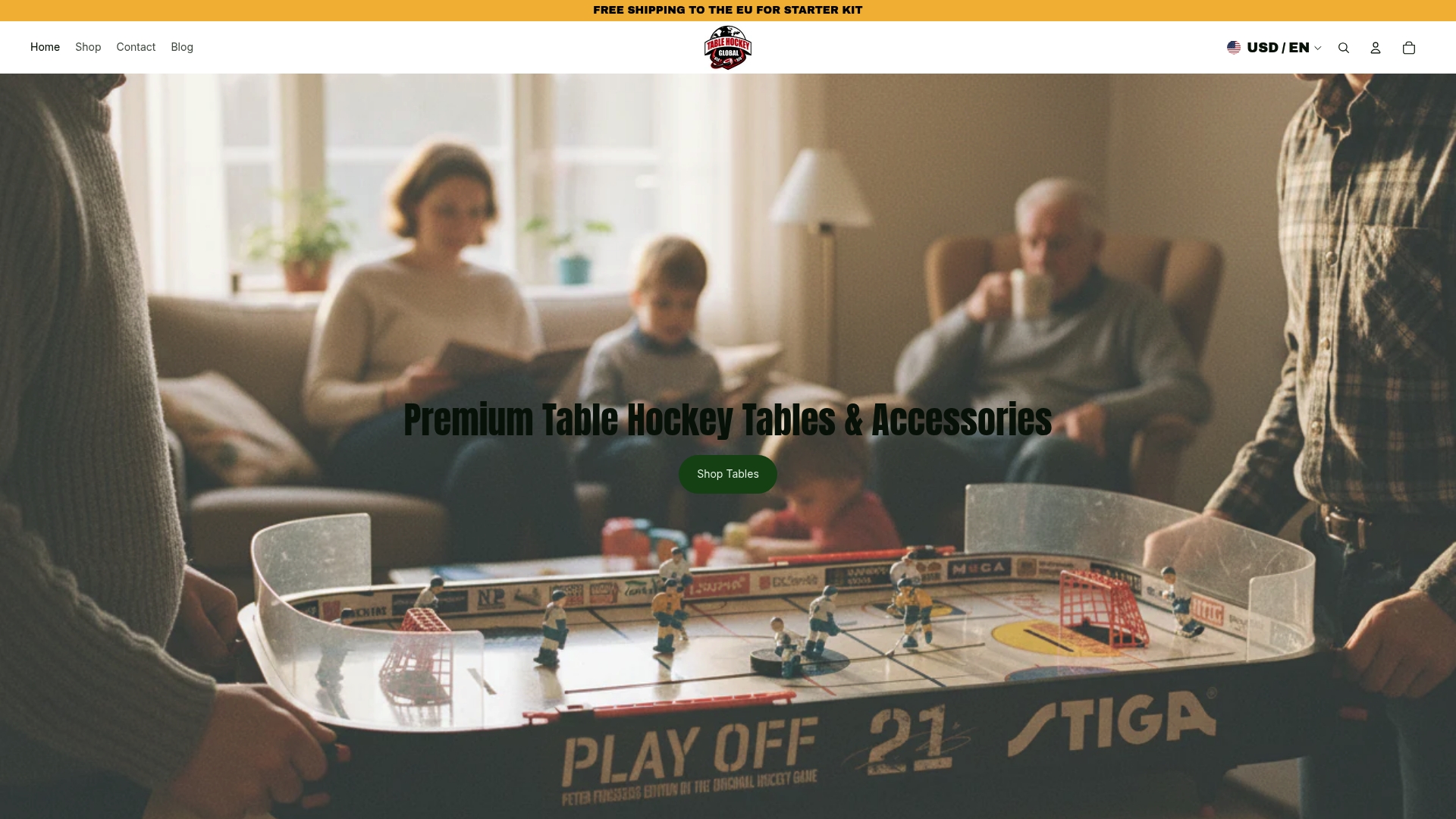
The site covers the full European table hockey guide, including where to find local clubs, how to register for events, and which resources help beginners improve fastest. Whether your family wants to play casually at home or compete in junior tournaments, Table Hockey Global connects you with the right information and the right people. The community is active, international, and open to new players at any skill level.
Frequently asked questions
Is table hockey suitable for young children?
Yes, children as young as five can enjoy table hockey. Quick matches and simple starting rules make it easy for beginners of any age to join in.
Do I need a special table to play official matches?
Competitive play requires an official Stiga Playoff table set to factory surface speed, but casual family games work fine on any quality table hockey set.
Where can families find local table hockey events?
Many European cities host junior-friendly clubs and tournaments. Check national table hockey federation websites or the Table Hockey Global community page for listings near you.
How is table hockey different from air hockey?
Table hockey uses rods and figures for team-based mechanical play, while air hockey uses paddles and a puck gliding on an air-cushion surface with no player figures involved.
Can families compete in international events?
Yes. With regular practice, families can enter local and international tournaments. World Championships run every two years, and junior divisions are a standard part of most competitive events.
Recommended
- Table hockey vs air hockey: best family game for 2026 – Table Hockey Global
- Team building with table hockey: connect with your kids – Table Hockey Global
- Table hockey statistics guide: players and fans 2026 – Table Hockey Global
- Why Table Hockey is a Game-Changer for Child Development: Backed by Re – Table Hockey Global