How events shape table hockey: rules, skills, community
TL;DR:
- Organized table hockey events establish standardized rules, official rankings, and fair play worldwide.
- Competitive tournaments enhance players’ skills, tracking progress from local to world championships.
- Events foster community, mentorship, and resilience, making the sport about personal growth as well as winning.
Table hockey is not just a game you pull out at a family gathering. The ITHF organizes the World Championship every two years using standardized Stiga tables, binding players across dozens of countries under one competitive framework. Organized events are what separate casual players from ranked competitors. They set the rules, define the equipment, and create the pathways that let anyone, from a first-timer to a seasoned pro, measure real progress. This article breaks down exactly how tournaments and championships shape gameplay, accelerate skill development, and build the global table hockey community.
Table of Contents
- Why events matter: From casual play to global competition
- The rules and structures that shape fair competition
- How events accelerate skill development and ranking
- Building community and connection through table hockey events
- A fresh look: Why table hockey events matter more than you think
- Ready to join the global table hockey scene?
- Frequently asked questions
Key Takeaways
| Point | Details |
|---|---|
| Events drive competition | Organized tournaments create a structured pathway for player skill growth and official rankings. |
| Rules ensure fairness | Strict event guidelines guarantee fair, skill-based play and credibility for all competitors. |
| Community is central | Events unite players, foster camaraderie, and are the lifeblood of the global table hockey scene. |
| Progress is measurable | Standardized events allow players to track improvement, rise in rankings, and set new goals. |
Why events matter: From casual play to global competition
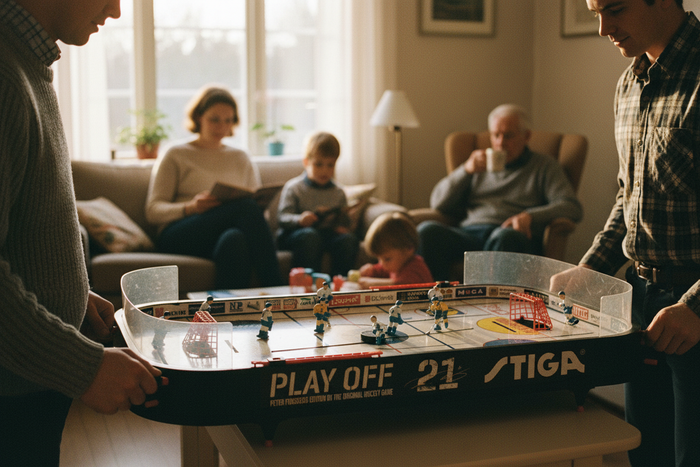
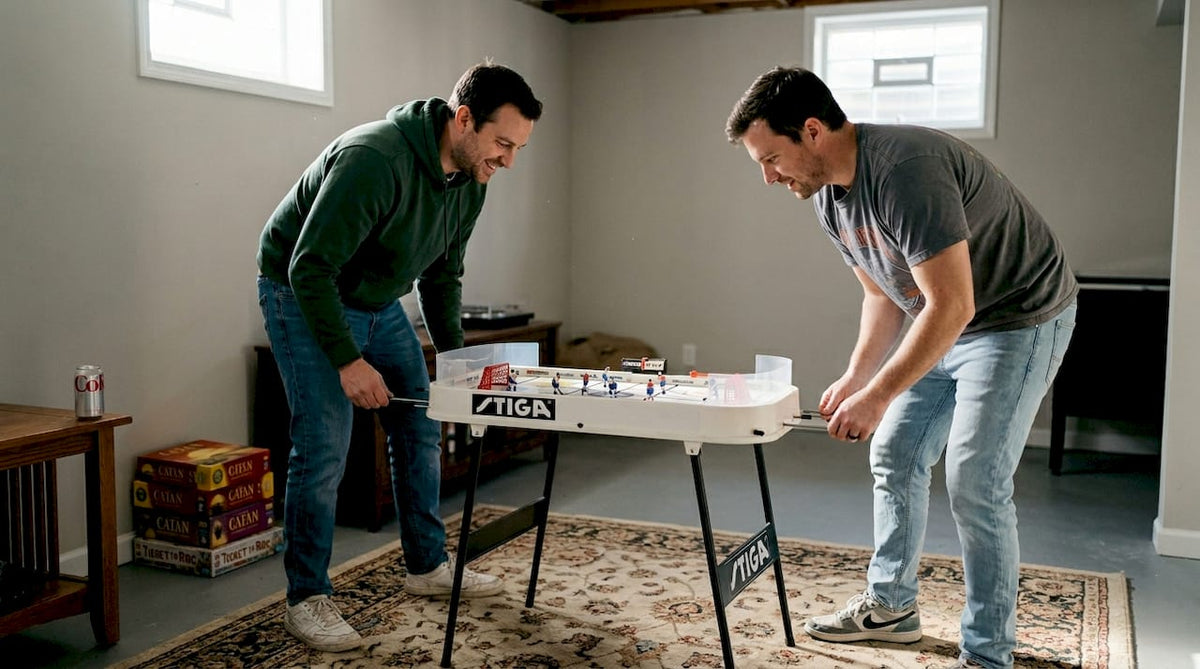
Most people discover table hockey at home. A Stiga table in the basement, a few friends, and informal rules that change every session. That version of the game is fun, but it has a ceiling. Organized events remove that ceiling.
The International Table Hockey Federation (ITHF) is the governing body that unifies competitive table hockey worldwide. It sets the standards, sanctions the tournaments, and runs the World Championship on a two-year cycle. Without this structure, there would be no consistent way to compare players across countries or track improvement over time.
Events do several things that casual play simply cannot:
- They establish a shared rulebook that every player follows
- They create official rankings that reflect real skill
- They provide a stage where players can test themselves against the best
- They generate records, statistics, and history for the sport
- They connect players who would never otherwise meet
The transformation from kitchen-table game to international sport did not happen by accident. It happened because organizers built events with structure, credibility, and consistency. Each tournament adds another data point to a player’s profile and another chapter to the sport’s story.
“Events are where table hockey stops being something you do and starts being something you are.”
For players who want to go beyond home games, community activities in table hockey offer a natural first step into the organized world. Local clubs, regional tournaments, and online leagues all feed into the larger competitive ecosystem that the ITHF oversees.
The sense of belonging that comes from attending your first tournament is hard to replicate anywhere else. You are no longer playing against the same two or three people. You are part of a global sport.
The rules and structures that shape fair competition
Fair competition requires more than good intentions. It requires written rules, standard equipment, and consistent officiating. Table hockey events deliver all three.
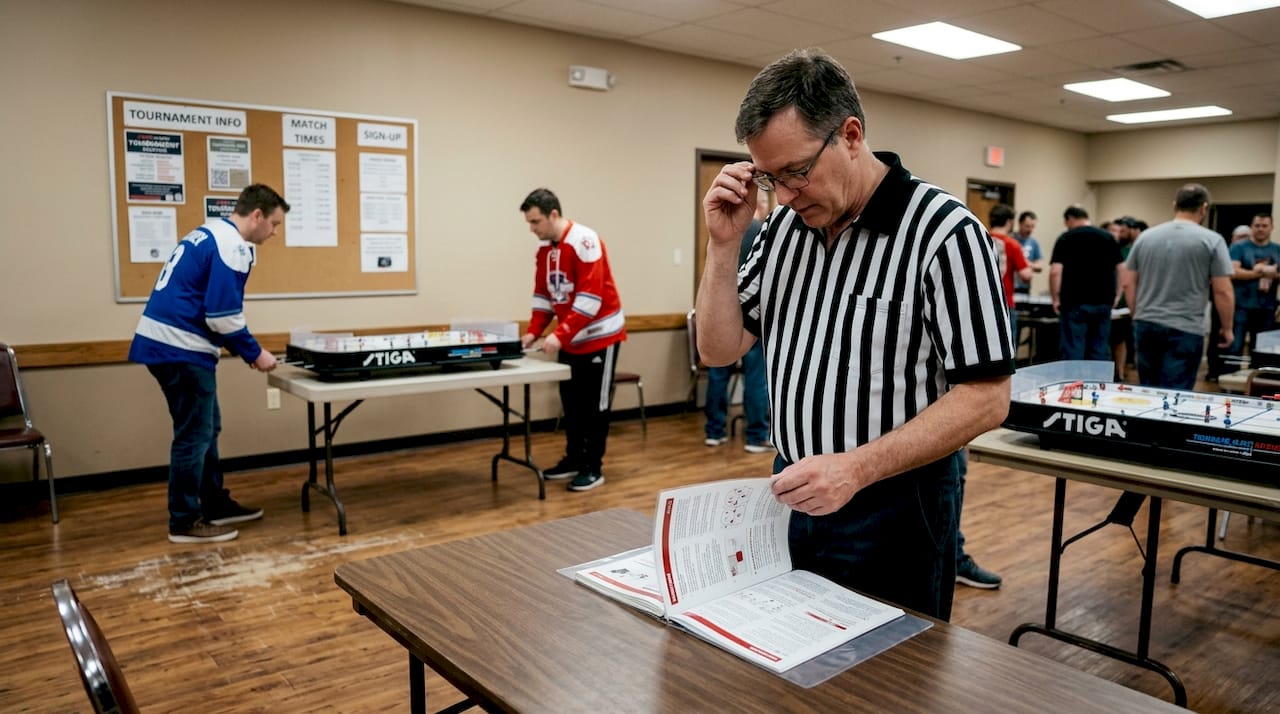
All sanctioned ITHF events use Stiga tables. This is not arbitrary. Using the same table model means that no player has a hardware advantage. The playing surface, the player figures, and the puck behavior are identical in every venue. That consistency is the foundation of credible results.
Beyond equipment, tournament rules cover a detailed set of procedures:
| Rule area | Details |
|---|---|
| Match duration | 5-minute regulation periods |
| Overtime | Sudden death format |
| Face-off protocol | Standardized restart procedure |
| Passive play | Possession limits to prevent stalling |
| Interference | Penalties for illegal contact or distraction |
These rules do more than prevent cheating. They create a shared language. When you know that every opponent plays under the same constraints, the outcome reflects skill, not luck or loopholes.
Pro Tip: Study the passive play rule before your first tournament. Many beginners lose points not because of poor technique but because they hold possession too long without advancing.
The rules of championship table hockey are publicly available and worth reading in full before you enter any event. Understanding them in advance gives you a real competitive edge and prevents avoidable penalties during matches.
Consistency in officiating also enables the ranking system to function properly. When every match is played under the same conditions, the numbers mean something. A ranking point earned in Sweden carries the same weight as one earned in Finland or Canada.
How events accelerate skill development and ranking
Once fair play is ensured by standardized rules, the next step is how events turn players into experts and track their journey.
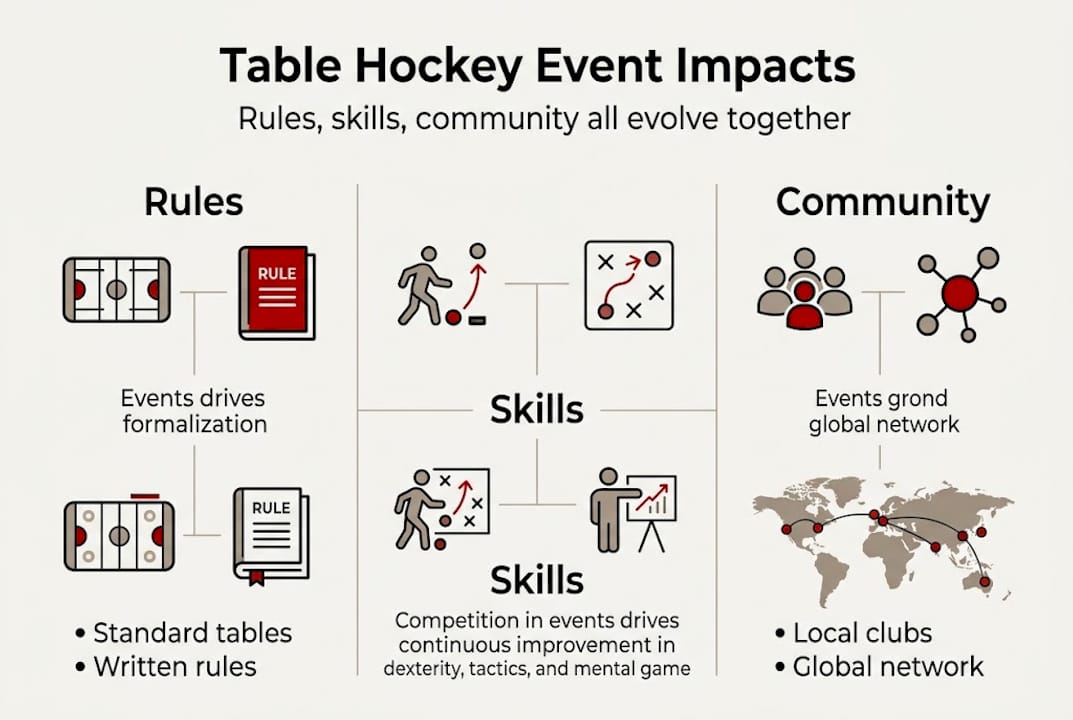
Playing at home against familiar opponents teaches you their habits. Playing at a tournament teaches you your own. The range of opponents you face at an organized event exposes patterns in your game that you would never notice otherwise.
Here is a typical progression for a competitive table hockey player:
- Local club play — Learn fundamentals, develop basic shot and defense patterns
- Regional tournaments — Face unfamiliar opponents, identify skill gaps
- National championships — Compete for official national ranking points
- World Championship — Test against the global elite under full ITHF standards
Global rankings and skill progression are enabled by the standardized Stiga tables and ITHF rules that apply at every level. Your ranking is not a guess. It is a calculated score based on real results against real opponents.
| Event level | Ranking impact | Skill focus |
|---|---|---|
| Local | Low | Fundamentals |
| Regional | Medium | Consistency |
| National | High | Tactical depth |
| World | Maximum | Elite execution |
Tracking your stats is a key part of this process. A solid statistics guide for players can help you interpret your tournament results and identify exactly where to focus your practice time.
The sport is also evolving. Keeping up with table hockey trends helps you understand what techniques are gaining traction at the top level. If you want to push further, resources on advanced table hockey play cover the strategies that separate good players from great ones.
The feedback loop is clear. Events create pressure. Pressure reveals weakness. Weakness drives practice. Practice builds skill. Skill earns ranking points. Ranking points open doors to bigger events.
Building community and connection through table hockey events
Skill improvement makes the sport rewarding, but for many players, it is the community that keeps them coming back to events.
Table hockey tournaments are social environments. You spend hours in the same venue with people who share your specific passion. That creates connections that do not form easily anywhere else. Many of the sport’s strongest friendships started across a Stiga table at a regional event.
The community benefits of organized events include:
- Mentorship — Experienced players often coach beginners between rounds
- Rivalry — Repeated matchups with the same opponents build motivation
- Team formats — Doubles and team competitions require coordination and trust
- Shared history — Players reference the same tournaments, results, and moments
- Global reach — The ITHF World Championship brings together players from across Europe, North America, and beyond
Pro Tip: Introduce yourself to at least three new players at your first tournament. The relationships you build at events often matter more to your long-term development than any single match result.
Team competitions are especially effective at building community. When you practice with a partner toward a shared goal, you both improve faster than you would alone. The accountability is built in.
The social side of events also drives the sport’s growth. Players who feel connected to a community recruit their friends, organize local clubs, and keep the ecosystem alive. Exploring community activities is one of the best ways to find your entry point into this network, whether you are brand new or already competing at a national level.
Events are not just competition. They are the sport’s infrastructure.
A fresh look: Why table hockey events matter more than you think
Most players who start competing focus almost entirely on winning. That is understandable. Rankings are visible, results are public, and losses sting. But after spending time inside the competitive table hockey world, a different picture emerges.
The players who grow fastest are not always the ones who win the most early on. They are the ones who show up consistently, absorb feedback, and stay connected to the community between events. Tournaments create pressure, and pressure is one of the most effective learning environments available.
What you track in your progress matters as much as the score. Players who analyze their tournament performance, note where they lost control under pressure, and adjust their practice accordingly improve at a measurably faster rate.
Events also build resilience. Losing a close match in overtime teaches you something that winning never can. The players who last in this sport are the ones who treat every event as data, not just a verdict.
The real value of organized table hockey events is not the trophy. It is the person you become by competing in them regularly.
Ready to join the global table hockey scene?
Table Hockey Global is the world’s largest community for table hockey players at every level. Whether you are just learning the basics or preparing for your first tournament, the platform connects you with players, events, and resources from around the world.
You can browse upcoming events, find local clubs, and connect with a global network of enthusiasts who share your interest in the sport. If you want to go deeper into the community side of things, check out more community activities to find your next step. Sign up for event alerts and start building the connections that will take your game further than home practice ever could.
Frequently asked questions
What makes an official table hockey event different from casual play?
Official events use standardized Stiga tables, written ITHF rules, time limits, and trained officials to ensure consistent and fair competition. Casual play has none of these controls.
How do table hockey tournaments impact player rankings?
Results from sanctioned tournaments feed directly into official ranking calculations, giving players a measurable score that reflects their performance across multiple opponents and events.
Are there age or skill requirements to participate in events?
Most events offer divisions for different ages and experience levels, so players of all skill levels can enter and compete at an appropriate tier.
How can I find table hockey events or communities near me?
Table Hockey Global provides event listings, community groups, and player resources to connect you with both local clubs and the broader global table hockey network.
Recommended
- Top table hockey community activities: skills and connections – Table Hockey Global
- Table hockey team roles: guide for players and fans – Table Hockey Global
- Table hockey statistics guide: players and fans 2026 – Table Hockey Global
- Discover table hockey: family fun and global community – Table Hockey Global

Like our articles? Add Table Hockey Global as a preferred source, and Google will show you more of them.