Master advanced table hockey play: skills and strategies 2026
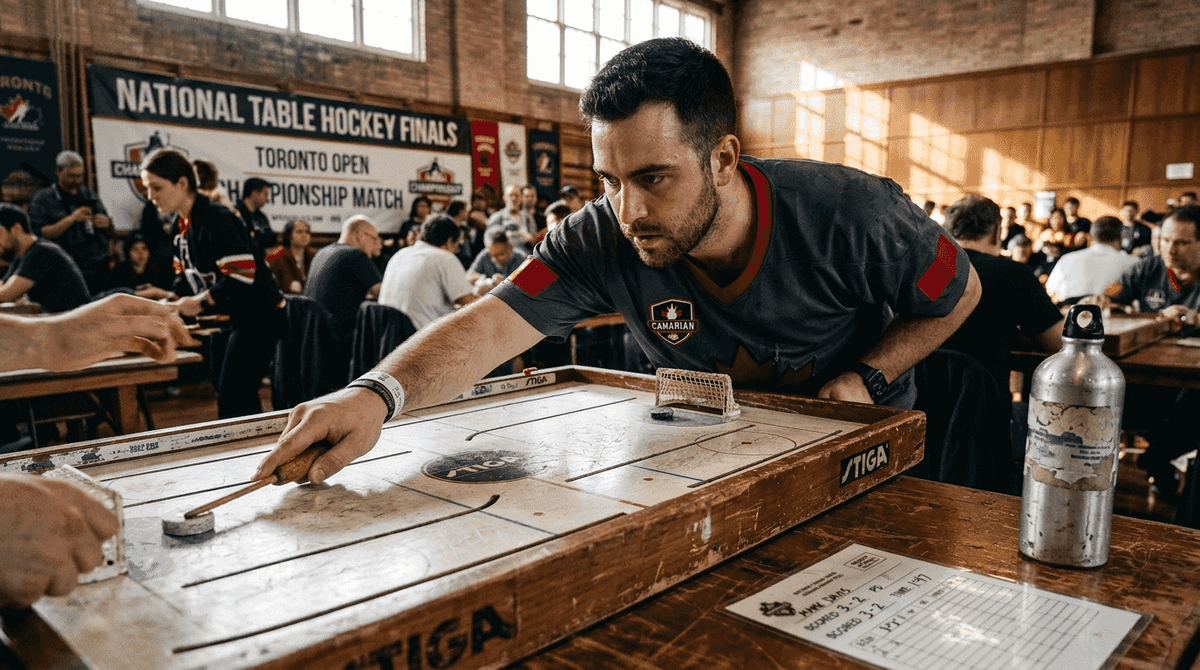
Many assume advanced table hockey is just about lightning reflexes and quick sticks, but that’s only scratching the surface. The reality is far more nuanced. Elite players harness principles of physics, employ chess-like tactical adaptability, and maintain the physical stamina of endurance athletes across marathon tournament sessions. With professional matches featuring 60 to 120 attacks in just five minutes and top competitors playing over 40 games per event, advanced table hockey demands a unique blend of mental acuity, strategic flexibility, and physical resilience. This guide unpacks the core skills and strategies that define expert-level play in 2026.
Table of Contents
- The Physics Behind Advanced Puck Control
- Tactical Adaptability: Reading And Responding To Your Opponent
- The Global Competitive Landscape And Standard Regulations
- Applying Advanced Table Hockey Skills To Elevate Your Game
- Discover The Best Table Hockey Resources And Community
- Frequently Asked Questions
Key takeaways
| Point | Details |
|---|---|
| Physics mastery | Advanced players manipulate spin, friction, and momentum to control puck trajectories and deceive opponents. |
| Tactical adaptability | Top competitors adjust strategies mid-game by reading opponent patterns and exploiting momentum shifts. |
| Global standards | World Championships occur biennially using Stiga Play Off equipment with strict IIHF regulations. |
| Sportsmanship foundation | Respect, integrity, and discipline are non-negotiable pillars of advanced competitive play. |
The physics behind advanced puck control
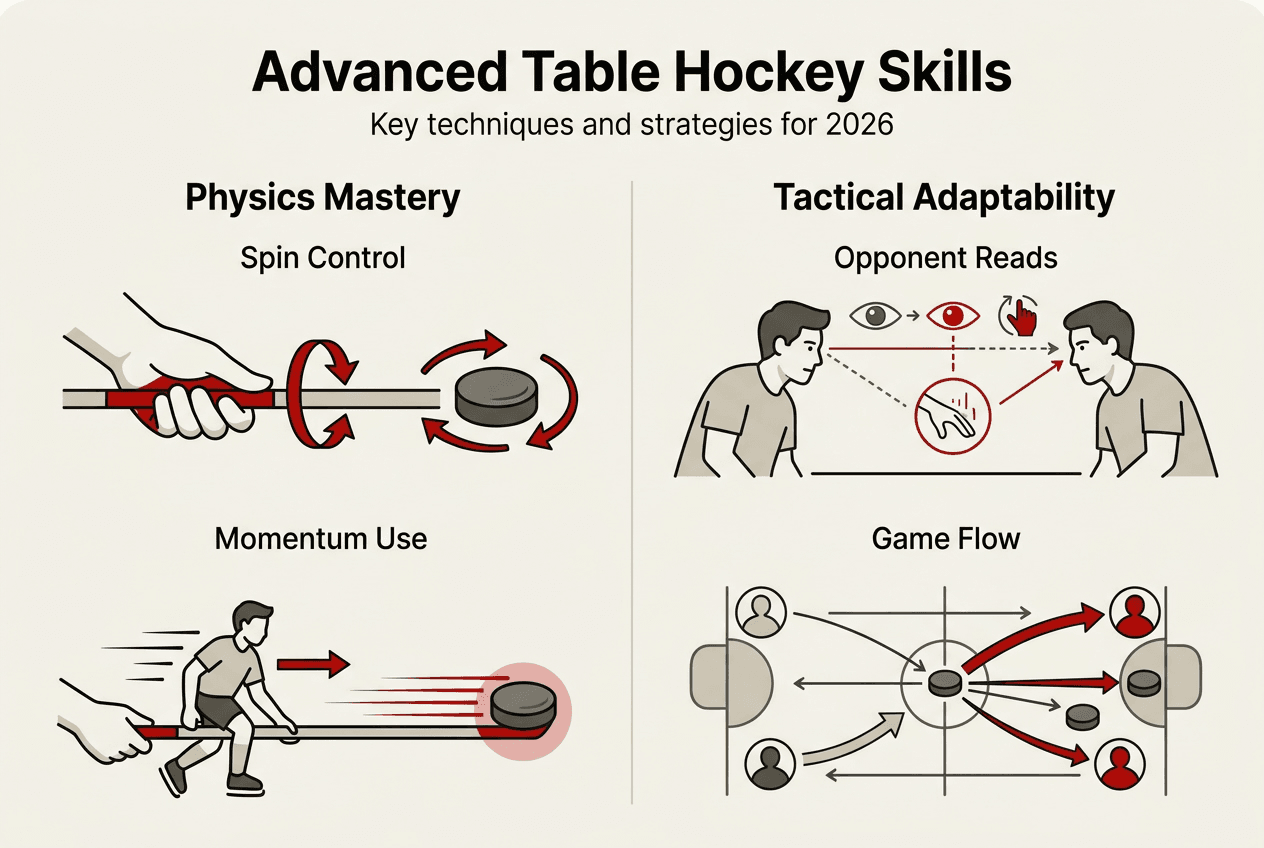
Understanding the physics of puck movement transforms good players into elite competitors. Advanced players use spin, friction, and momentum principles to manipulate puck movement and create deceptive shots that leave opponents guessing. Spin imparts directional control, allowing you to curve passes around defensive rods or angle shots into tight corners. When you strike the puck off-center, rotational energy redirects its path in ways that appear counterintuitive to less experienced players.
Friction between the puck and playing surface dictates speed retention and stopping power. Smoother surfaces reduce friction, enabling faster puck travel and requiring quicker reaction times. Conversely, slightly textured surfaces increase friction, giving you more control during dribbling sequences and allowing for precise shot placement. Elite players adjust their stick pressure and contact angle based on surface conditions, optimizing for either speed or control depending on tactical needs.
Momentum management separates casual play from competitive mastery. Transferring energy efficiently from rod rotation to puck acceleration demands perfect timing and contact point precision. You need to strike at the exact moment when your player figure reaches peak rotational velocity, maximizing kinetic energy transfer. This principle applies equally to defensive clears, where absorbing puck momentum through controlled cushioning prevents wild rebounds that create scoring chances for opponents.
Pro Tip: Practice striking the puck at different contact points (center, edge, corner) to internalize how spin affects trajectory. Record your practice sessions to identify patterns in your shot mechanics.
Mastering puck physics isn’t about memorizing formulas; it’s about developing intuitive feel through thousands of repetitions until manipulating spin and momentum becomes second nature.
Controlling these physical principles enables both offensive creativity and defensive anticipation. When you understand how friction slows a hard pass, you position your defensive rods accordingly. When you recognize the spin on an opponent’s shot, you predict the rebound angle and prepare your counterattack. This knowledge transforms reactive play into proactive strategy, giving you split-second advantages that accumulate into match-winning margins. For deeper insights into how balance affects your shot power, explore techniques to master balance for faster shots.
Tactical adaptability: reading and responding to your opponent
Physical skills mean little without the mental flexibility to adapt mid-match. Top players adjust strategies quickly based on opponent behavior and momentum shifts, treating each game as a dynamic puzzle rather than a scripted routine. Analyzing your opponent’s stickhandling patterns reveals exploitable tendencies. Does their forward rod favor cross-ice passes? Do they telegraph shots with a telltale wind-up motion? Identifying these habits lets you position defensively to intercept passes or block shooting lanes before the puck leaves their control.
Dynamic tactical adjustment requires constant observation and hypothesis testing. If your opponent dominates possession in the neutral zone, shift to a more aggressive forecheck to disrupt their rhythm. If they excel at quick counterattacks, adopt a conservative defensive posture that prioritizes gap control over risky offensive pushes. This real-time experimentation distinguishes advanced players who evolve their approach from intermediate players who stubbornly repeat ineffective patterns.
- Identify opponent tendencies: Watch their first three possessions closely to catalog preferred plays and weak-side vulnerabilities.
- Test tactical variations: Alternate between aggressive and conservative approaches to gauge which disrupts their comfort zone most effectively.
- Exploit momentum cycles: When you score or force a turnover, immediately increase offensive pressure to compound psychological advantages.
- Adjust defensive positioning: Shift rod angles and spacing based on whether your opponent favors perimeter shots or central lane attacks.
- Recognize fatigue patterns: Late in tournaments, physical exhaustion degrades stick control; capitalize by forcing extended rallies that amplify opponent errors.
Momentum management extends beyond individual possessions to encompass entire match narratives. After conceding a goal, resist the temptation to immediately force high-risk offensive plays. Instead, focus on winning the next possession cleanly, rebuilding confidence through controlled play before resuming aggressive tactics. Conversely, when you establish momentum, maintain offensive pressure without overcommitting defenders, forcing your opponent into reactive mode where mistakes multiply.
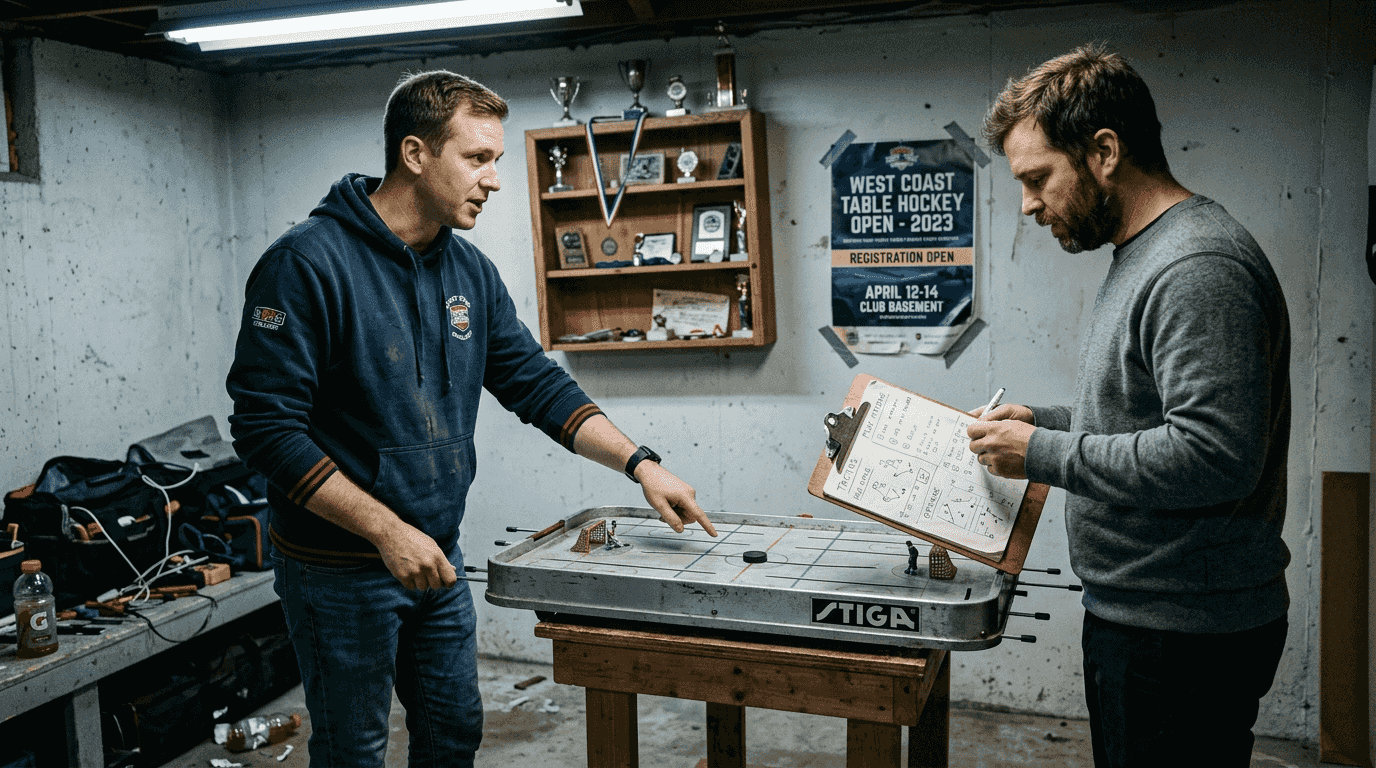
Pro Tip: Between games in tournament play, mentally replay key sequences where your tactics succeeded or failed. This reflection sharpens your pattern recognition for subsequent matches.
Mental flexibility compounds over tournament duration. Players who rigidly adhere to a single game plan plateau quickly, while adaptable competitors continuously refine their approach based on accumulated observations. Track your tactical adjustments and outcomes to identify which strategies yield consistent results against different play styles. This systematic approach to tracking your progress accelerates skill development and builds a versatile tactical toolkit.
The global competitive landscape and standard regulations
The international table hockey scene has evolved dramatically, with competitive standards now rivaling traditional sports in structure and professionalism. Sweden historically dominated world championships, but recent years have seen emerging powerhouses from Russia, Czech Republic, and North America challenge this supremacy. This competitive diversification has elevated overall play quality, as regional styles blend and players adopt the most effective techniques regardless of geographic origin.
World Championships occur every two years using Stiga Play Off as official equipment, ensuring standardized playing conditions across all competitive levels. This equipment specification eliminates variables related to table quality, allowing pure skill to determine outcomes. The biannual schedule gives players adequate preparation time between major events while maintaining competitive momentum that keeps the sport vibrant and evolving.
| Regulation Aspect | Standard Specification |
|---|---|
| Official Equipment | Stiga Play Off table |
| Championship Frequency | Every two years |
| Match Duration | 5 minutes of active play |
| Average Attacks per Game | 60 to 120 |
| Tournament Game Count | 40+ games for competitors |
The IIHF rule book highlights respect, integrity, and discipline as fundamental principles that govern competitive play. These aren’t mere suggestions; violations result in penalties ranging from possession loss to match disqualification. Respect manifests in acknowledging opponent skill, accepting referee decisions without protest, and maintaining composure during contentious moments. Integrity demands honest play without attempting to exploit rule ambiguities or engage in unsportsmanlike conduct that undermines competitive fairness.
Player rankings reflect performance over the previous two years, weighting recent tournament results more heavily than older achievements. This system rewards consistent excellence while allowing rising players to climb rankings through strong showings at sanctioned events. Tournament level matters significantly; a quarterfinal finish at the World Championship carries more ranking weight than winning a regional competition. Opponent strength also factors into calculations, incentivizing players to seek challenging matchups rather than padding records against weaker competition.
- Rankings update quarterly based on sanctioned tournament results
- World Championship performances carry triple weight compared to regional events
- Head-to-head records serve as tiebreakers between similarly ranked players
- Inactive players (no tournament participation for 18 months) face ranking decay
Discipline extends beyond rule compliance to encompass physical and mental preparation. Top competitors maintain rigorous training schedules that build the stamina required for marathon tournament days. With 40+ games over a weekend event, physical conditioning becomes as crucial as technical skill. Players who neglect fitness fade in later rounds, making uncharacteristic errors as fatigue degrades reaction time and decision-making quality. Understanding the broader competitive context, including regional variations and equipment standards, helps players prepare appropriately; learn more about Stiga table hockey in 2026.
Applying advanced table hockey skills to elevate your game
Translating theoretical knowledge into practical improvement requires structured training and deliberate practice focused on specific skill gaps. Regular puck control drills that emphasize physics principles build the muscle memory needed for instinctive play during high-pressure moments. Dedicate practice sessions to isolated skills like spin control, momentum transfer, and friction management rather than only playing full games. This targeted approach accelerates skill acquisition by allowing concentrated repetition without the distractions of competitive pressure.
Analyzing match footage reveals tactical blind spots invisible during live play. Record your tournament games and review them critically, noting moments where better positioning or tactical adjustment could have changed outcomes. Pay special attention to possessions where you lost control; identify whether the breakdown stemmed from technical execution errors or strategic miscalculation. This analytical process transforms defeats into learning opportunities and accelerates the development of tactical intuition.
- Practice puck control drills for 20 minutes daily, focusing on one physics principle per session
- Review match footage within 24 hours while tactical decisions remain fresh in memory
- Simulate tournament conditions during practice by playing multiple consecutive games to build stamina
- Seek sparring partners with diverse play styles to broaden tactical experience
- Maintain a training log documenting which techniques yield improvement and which require refinement
Joining tournaments at progressive difficulty levels builds competitive experience while earning ranking points. Start with local events to test skills against regional competition before advancing to national and international championships. Player rankings consider tournament level and opponent strength, so strategic tournament selection maximizes ranking gains. Balance challenging yourself against top competitors with ensuring you remain competitive enough to advance through brackets and accumulate meaningful results.
Pro Tip: Create a pre-match routine that includes physical warm-up, mental visualization, and equipment check. Consistency in preparation reduces anxiety and optimizes performance readiness.
Maintaining respect for opponents and officials embodies the sportsmanship standards that define advanced play. Gracious conduct during victories and defeats builds reputation within the community and opens doors to training partnerships with elite players. The table hockey world remains relatively small; your behavior at tournaments directly impacts future opportunities for high-level competition and skill development. Treat every opponent as a potential teacher, every match as a learning opportunity, and every official decision as final regardless of personal opinion. Connecting with the broader community enhances your development; explore opportunities through the European table hockey scene.
Discover the best table hockey resources and community
Elevating your game requires more than isolated practice; it demands connection to a vibrant community that shares knowledge, organizes competitions, and celebrates the sport’s evolution. Table Hockey Global serves as the world’s largest hub where players at every level access equipment recommendations, training methodologies, and tournament calendars. Whether you’re mastering fundamentals on your home table or preparing for international competition, comprehensive resources guide your development journey.
The platform connects you with players worldwide, facilitating sparring partnerships, strategy discussions, and friendly rivalries that accelerate skill growth. Stay current with technique innovations, equipment updates, and tournament results through regularly updated content that keeps you competitive in 2026’s evolving landscape. From beginners taking their first steps to professionals refining championship-level tactics, Table Hockey Global provides the tools and community support that transform dedication into measurable improvement.
Frequently asked questions
What is advanced table hockey play?
Advanced table hockey play combines mastery of puck physics, dynamic tactical adaptation, and physical stamina to compete at elite levels. It requires understanding how spin, friction, and momentum affect puck behavior while simultaneously reading opponents and adjusting strategies mid-match. Top players maintain the mental flexibility of chess masters and the endurance of athletes, competing through 40+ games per tournament with 60 to 120 attacks compressed into five-minute matches.
How does understanding puck physics improve my game?
Physics knowledge helps create deceptive shots by manipulating spin to curve passes and angle shots unexpectedly. Understanding friction lets you optimize stick pressure for either speed or control depending on tactical needs. Momentum mastery enables efficient energy transfer from rod rotation to puck acceleration, maximizing shot power while minimizing telegraphed movements that alert opponents.
What role does adaptability play in advanced table hockey?
Adaptability enables players to counter opponents by identifying patterns and adjusting tactics in real time. Top competitors treat each match as a dynamic puzzle, testing strategic variations to disrupt opponent rhythm and exploit momentum shifts. Mental flexibility compounds over tournament duration, allowing continuous tactical refinement based on accumulated observations that rigid game plans cannot accommodate.
How often is the table hockey World Championship held?
The World Championship occurs every two years using Stiga Play Off as the official equipment standard. This biannual schedule provides adequate preparation time between major events while maintaining competitive momentum. The standardized equipment eliminates table quality variables, ensuring pure skill determines championship outcomes across all competitive levels.
Recommended
- Track table hockey progress and improve your game in 2026 – Table Hockey Global
- Master balance in table hockey: 10% faster shots – Table Hockey Global
- Why Table Hockey is a Game-Changer for Your Kid’s Brain and Skills – Table Hockey Global
- Why Table Hockey is a Game-Changer for Child Development: Backed by Re – Table Hockey Global

Like our articles? Add Table Hockey Global as a preferred source, and Google will show you more of them.