How technology shapes table hockey: enhancements, insights
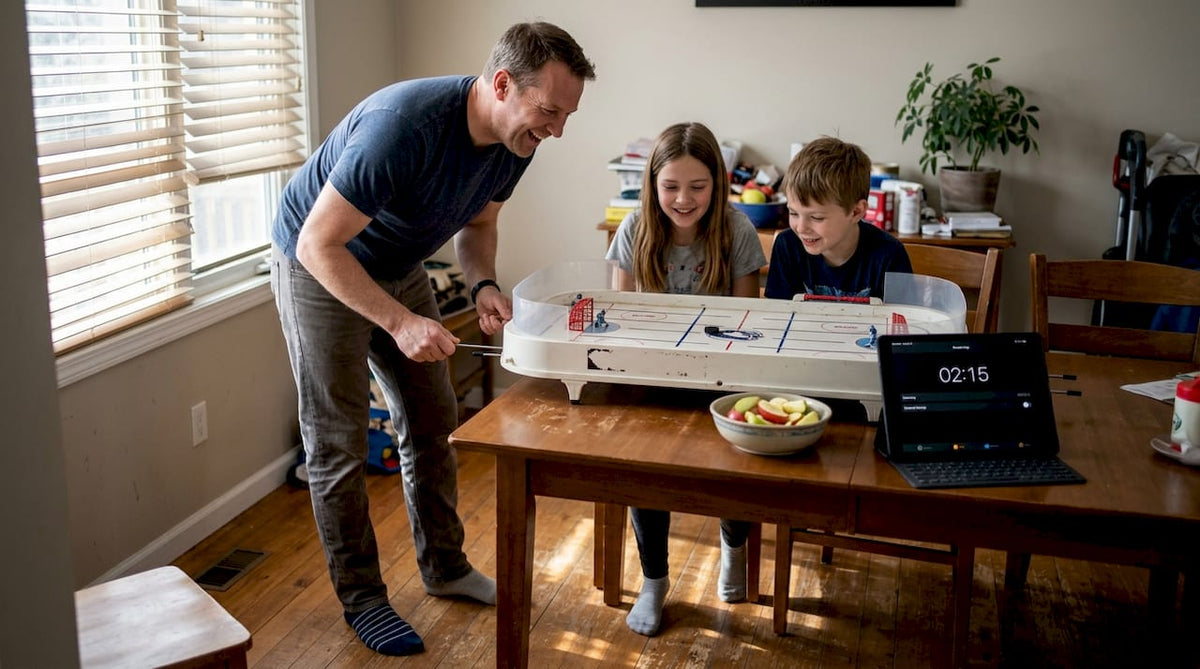
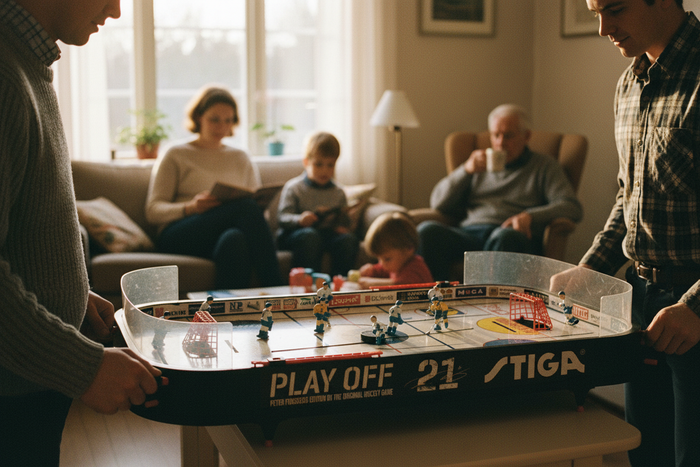
Table hockey is one of the few competitive sports where the core gameplay has changed almost nothing since the 1940s. Rods, figures, a puck, and a surface. That’s it. While other tabletop games have added screens, sensors, and Bluetooth connectivity, table hockey remains largely mechanical with minimal technology integration in core gameplay. This article covers where technology fits in table hockey, where it doesn’t, what DIY options exist for families, and why the sport’s low-tech identity is a deliberate and defensible choice.
Table of Contents
- Table hockey’s analog roots and competitive purity
- Technology in table hockey: where it fits (and where it doesn’t)
- DIY tech projects for table hockey families
- Digital tools for training and community connection
- The future: smart surfaces, materials, and what matters most
- Why ‘low-tech’ table hockey delivers the best of both worlds
- Get more from your table hockey journey
- Frequently asked questions
Key Takeaways
| Point | Details |
|---|---|
| Competitive rules stay analog | Official table hockey preserves mechanical play for fairness and skill. |
| Tech shines in casual play | LED lights, score apps, and DIY mods boost home enjoyment without breaking core rules. |
| Training goes digital | Apps and online communities help players improve and connect globally. |
| Materials matter most | Consistent surfaces and quality build have a bigger impact than electronics. |
| Smart integration is possible | Careful use of technology enhances fun and learning while respecting tradition. |
Table hockey’s analog roots and competitive purity
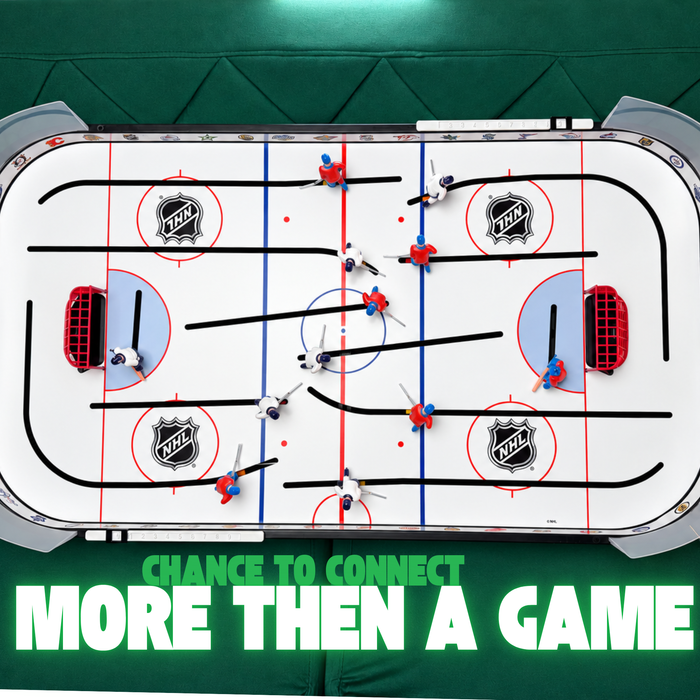
Classic rod-based table hockey works through direct mechanical control. Players grip and rotate metal rods to move figures across a playing surface. No batteries. No circuit boards. No digital feedback. The game rewards hand speed, wrist technique, and spatial awareness. These are skills that no electronic layer can replicate or replace.
The ITHF, which governs international competitive play, enforces strict mechanical uniformity. ITHF rules ban modifications to rods, figures, and surfaces. This isn’t an oversight. It’s a policy that keeps competition fair across countries and income levels. A player in Sweden competes on the same mechanical terms as a player in Canada.
“The rules exist to protect the integrity of skill-based competition. Any electronic modification changes the variable, not just the experience.”
The philosophy behind analog gameplay is straightforward.
- Accessibility: No expensive tech upgrades required to compete at the highest level
- Fairness: Every player uses the same mechanical setup
- Skill focus: Results depend entirely on physical technique and decision-making
- Consistency: Mechanical tables perform the same way regardless of software updates or battery life
For parents introducing kids to the sport, this matters. You’re not buying into a hardware ecosystem that requires constant upgrades. You buy a table, learn the mechanics, and compete. Staying current with table hockey trends shows that even as the community grows globally, the mechanical core stays constant. And reviewing table hockey statistics confirms that top-ranked players attribute their success to mechanical mastery, not gadgets.
Technology in table hockey: where it fits (and where it doesn’t)
Table hockey and air hockey look similar from a distance, but their relationship with technology is completely different. Air hockey relies on an electric motor to generate the air cushion that floats the puck. Remove the power, and the game stops. Table hockey requires zero electricity to play. That distinction shapes everything about how technology gets applied.
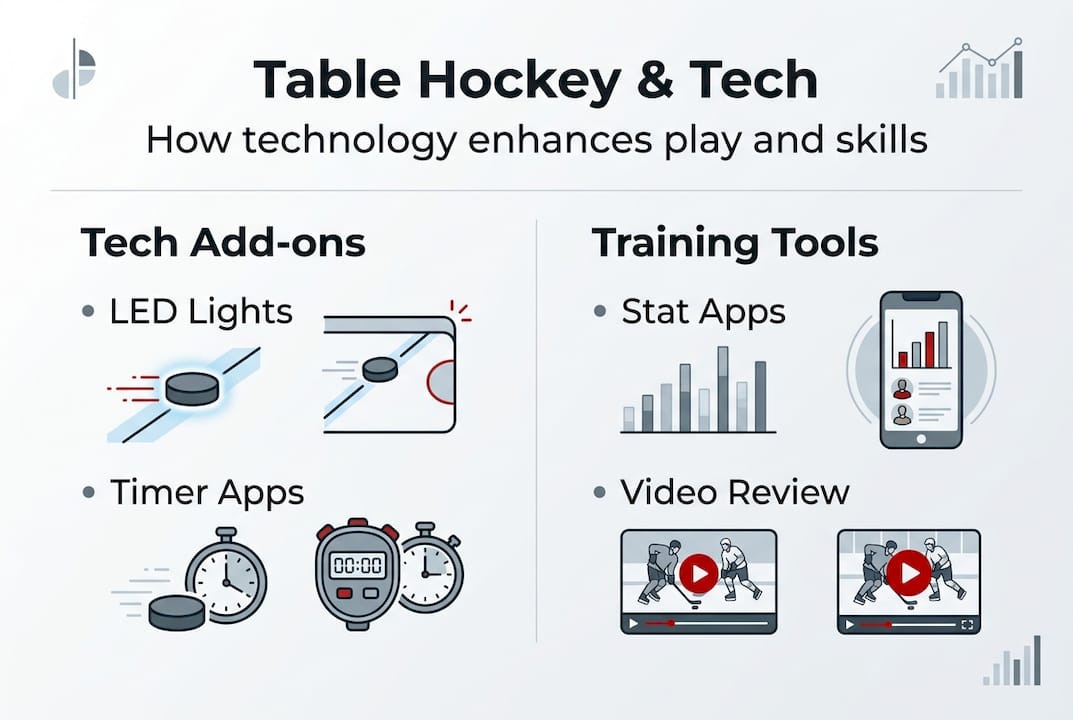
Where technology does add value in table hockey:
| Area | Technology used | Benefit |
|---|---|---|
| Scoring | Mobile apps, digital counters | Faster, accurate scorekeeping |
| Timing | LED countdown timers | Consistent match pacing |
| Training | Video analysis apps | Technique review and improvement |
| Community | Online platforms, streaming | Global connection and visibility |
| Home play | DIY LED lights, sound systems | Added atmosphere without rule conflict |
Tech-savvy enhancements work best for casual and home use. LED goal lights, scoring apps, and virtual practice tools add fun without touching the mechanical gameplay. This is the key distinction: technology wraps around the game, it does not enter the game.
For families comparing options, the table hockey vs air hockey breakdown is useful. Air hockey’s tech dependency means maintenance costs and potential downtime. Table hockey’s mechanical independence means fewer failure points.
Pro Tip: Use a free timer app on a phone or tablet as a visible countdown during home matches. It adds structure to casual play without modifying the table at all.
For tech-minded parents, the best entry point is table hockey progress tools that record session stats and highlight skill gaps. These tools sit entirely outside the table and work alongside mechanical practice.
DIY tech projects for table hockey families
Home play opens the door for creative, low-cost tech projects. These projects add excitement for kids without violating any competitive rules, since they don’t alter the rods, figures, or playing surface.
Here are four practical DIY ideas for families:
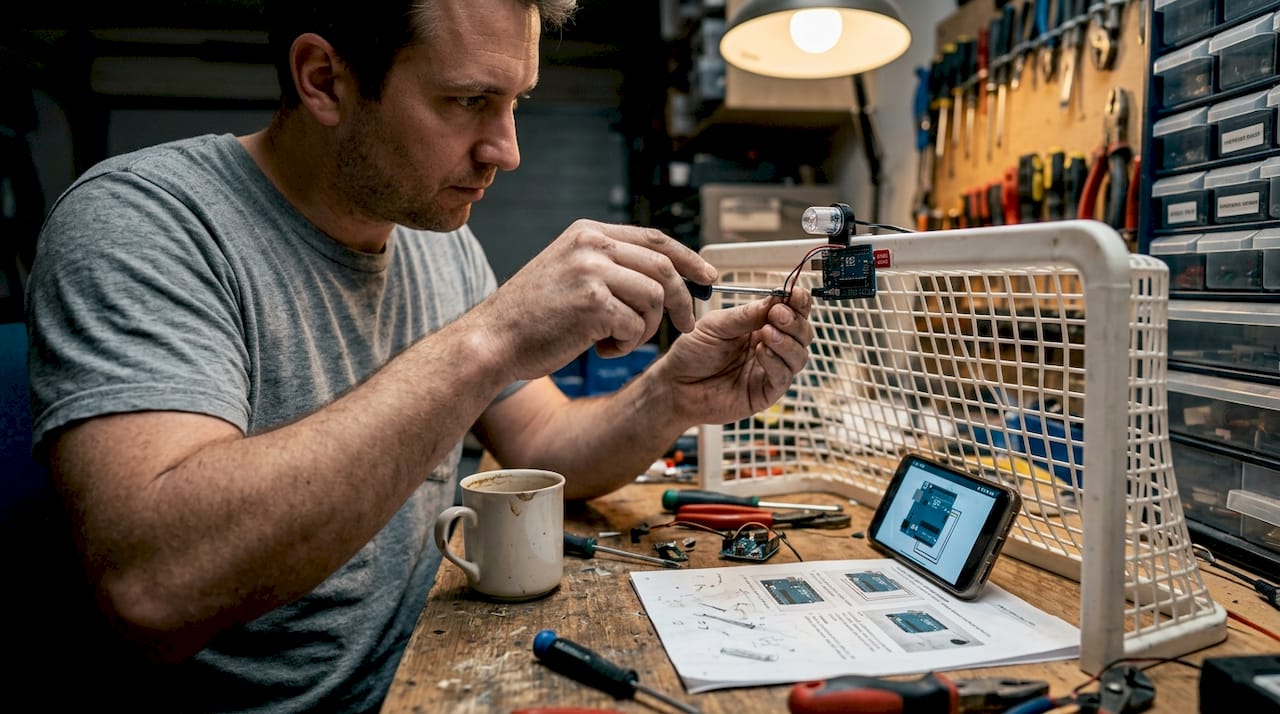
- Arduino-based electronic scorer. A small Arduino microcontroller connected to two push buttons lets players track goals on a digital display. Total cost is under $20. Kids can help build it, which adds a STEM learning layer to the game.
- LED goal lights. Mount LED strips behind each goal opening. Wire them to a button or a simple motion sensor. When a goal is scored, the lights flash. This is the single most popular DIY upgrade in the home table hockey community.
- Sound effect board. A small speaker connected to a Raspberry Pi can trigger crowd noise or a buzzer on button press. It sounds simple, but it changes the energy of home matches significantly.
- Camera-based movement analysis. Mount a phone or webcam above the table and record matches. Review the footage to analyze rod movement, figure positioning, and puck control patterns. This is a legitimate training method used by serious players.
Parents can use DIY and Arduino setups for kid-friendly scoring without altering play. The key rule is simple: if it touches the rods, figures, or surface, it’s off-limits for competitive purposes. Everything else is fair game at home.
Pro Tip: Before starting any DIY project, check that all components attach externally. Drilling into the table frame or surface voids most warranties and disqualifies the table from official use.
For players who want to connect DIY practice to real skill gains, the guide on how to improve your table hockey game pairs well with any home tech setup.
Digital tools for training and community connection
Beyond hardware, software and online platforms have become a serious part of the table hockey ecosystem. These tools don’t touch the table. They support the player.
Key digital tools available to table hockey players:
- Skill tracker apps: Log session results, track win rates, and identify patterns in performance over time
- Video coaching platforms: Upload match footage for remote review by experienced coaches or community mentors
- Livestreaming: Platforms like YouTube and Twitch host live table hockey matches, giving players access to high-level gameplay from around the world
- Forums and Discord servers: Real-time strategy discussion, equipment advice, and tournament announcements
- Social media groups: Facebook and Reddit communities share technique videos, DIY projects, and event coverage
Apps and digital tools support training and skill development for table hockey players at every level. The data below shows how different tools map to player goals.
| Tool type | Best for | Skill level |
|---|---|---|
| Stat tracking app | Consistency monitoring | All levels |
| Video analysis | Technique correction | Intermediate to advanced |
| Livestream viewing | Learning from top players | Beginner to intermediate |
| Online coaching | Structured improvement | All levels |
| Community forums | Strategy and equipment | All levels |
For players ready to push further, resources on advanced table hockey skills and faceoff techniques provide structured guidance that pairs directly with digital tracking tools. The combination of mechanical practice and digital review is where real improvement happens fastest.
The future: smart surfaces, materials, and what matters most
Sensor technology is getting smaller and cheaper every year. It’s reasonable to ask whether table hockey will eventually incorporate embedded sensors, digital ice surfaces, or real-time puck tracking. The honest answer is: possibly, but not in competitive play anytime soon.
“The players who win consistently care most about surface speed, zero dead spots, and rod smoothness. Those are material problems, not software problems.”
What players actually prioritize when evaluating tables:
- Surface speed: How fast the puck travels across the playing field
- Consistency: No slow patches, warps, or dead zones anywhere on the surface
- Rod smoothness: Minimal friction for fast, precise figure movement
- Figure quality: Accurate puck contact geometry for predictable shots
- Durability: Materials that hold up under thousands of hours of play
Surface speed consistency is the key factor. Better materials matter more than electronics for competitive performance. This is why material science advances, like improved surface coatings and precision-machined rods, are more relevant to serious players than any digital feature.
Smart surfaces with embedded sensors could eventually serve as training aids, tracking puck velocity and shot placement without altering mechanical play. That’s a realistic near-future application. But the core game will stay mechanical because the community values it that way. For players thinking about sustainability alongside performance, the guide on eco-friendly table hockey covers how material choices connect to both performance and environmental responsibility.
Why ‘low-tech’ table hockey delivers the best of both worlds
The common assumption is that less technology means less progress. Table hockey challenges that directly. The sport’s analog core is not a limitation. It’s the feature that keeps competition fair, accessible, and skill-dependent across every country and income level.
Digital tools, apps, and DIY projects don’t compete with that. They support it. A player who uses video analysis to correct their wrist technique is using technology to get better at a mechanical skill. That’s the right relationship between tech and the game.
The comparison with table hockey vs air hockey is instructive here. Air hockey needs power to function. Table hockey needs skill. One is dependent on infrastructure. The other is self-contained. That independence is what makes table hockey portable, durable, and globally competitive without requiring standardized electrical access.
Respecting the mechanical tradition isn’t resistance to change. It’s recognition that the game’s design already solved the fairness problem that technology often creates. The real innovation in table hockey is community, coaching, and access, not circuit boards.
Get more from your table hockey journey
Table Hockey Global is the world’s largest community for players at every level, from first-time beginners to seasoned competitors. Whether you’re exploring DIY tech projects for home play or looking to connect with players worldwide, the resources here are built around the game you already love.
Visit Table Hockey Global to access guides, community forums, and tools that support every part of your game. For players focused on measurable improvement, digital progress tracking tools are available to help you log sessions, review stats, and identify exactly where your game needs work. The community is active, the resources are practical, and the game is waiting.
Frequently asked questions
Can I use electronic scoring systems in official table hockey tournaments?
No. ITHF rules ban modifications including electronic scoring systems, as official tournaments require mechanical uniformity to ensure competitive fairness across all participants.
What’s the best way to introduce technology to kids playing table hockey at home?
Start with external add-ons like LED goal lights or an Arduino-based scorer that attach outside the table and do not alter the rods, players, or surface in any way.
Are there table hockey apps for practice and skills improvement?
Yes. Apps and digital tools can track session progress, provide structured drills, and help analyze gameplay patterns without affecting official competitive rules.
Does technology make table hockey more fun for families?
Many families find that tech enhancements like digital scoreboards and streaming live matches add atmosphere and engagement to home play without changing the mechanical game itself.
Recommended
- Top table hockey trends transforming play in 2026 – Table Hockey Global
- Master advanced table hockey play: skills and strategies 2026 – Table Hockey Global
- Table hockey statistics guide: players and fans 2026 – Table Hockey Global
- Master advanced table hockey techniques for competitive play – Table Hockey Global

Like our articles? Add Table Hockey Global as a preferred source, and Google will show you more of them.